
Last updated November 15, 2026
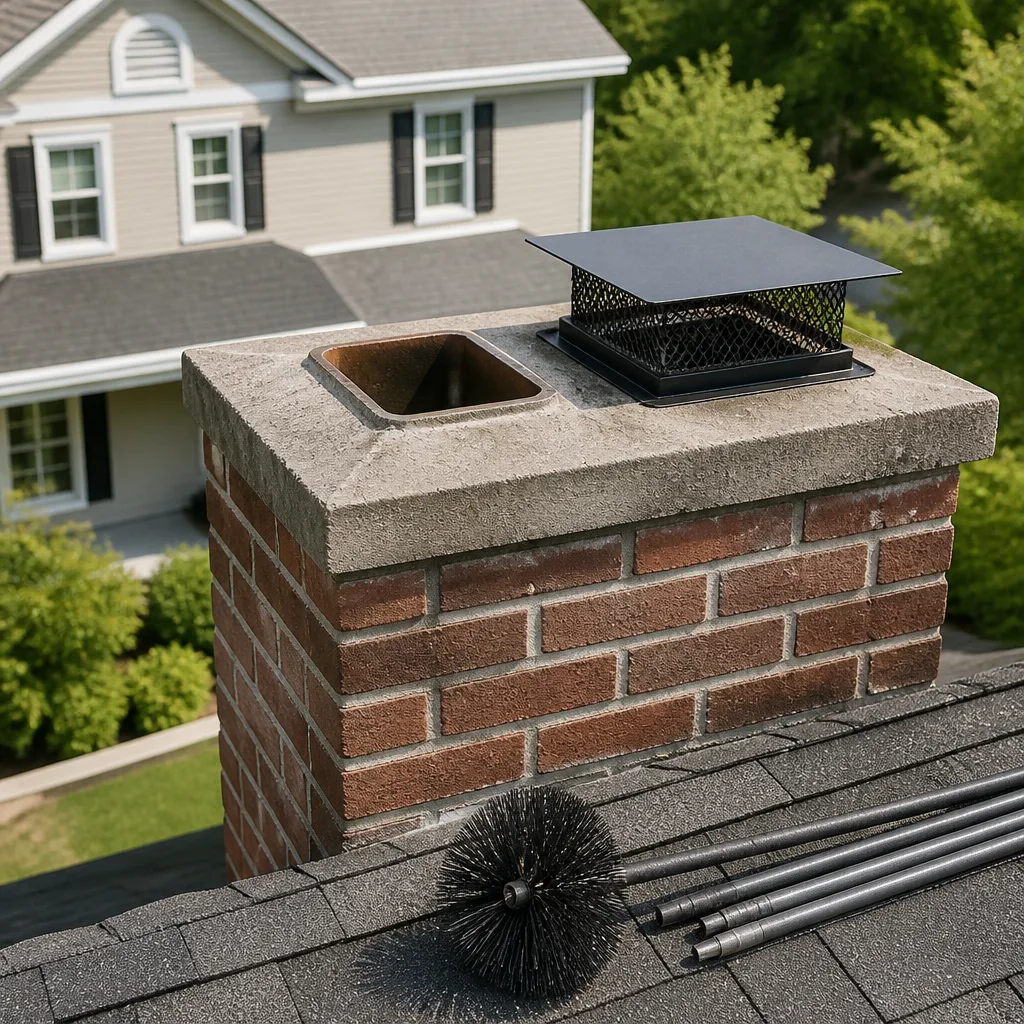 Sweep & inspection
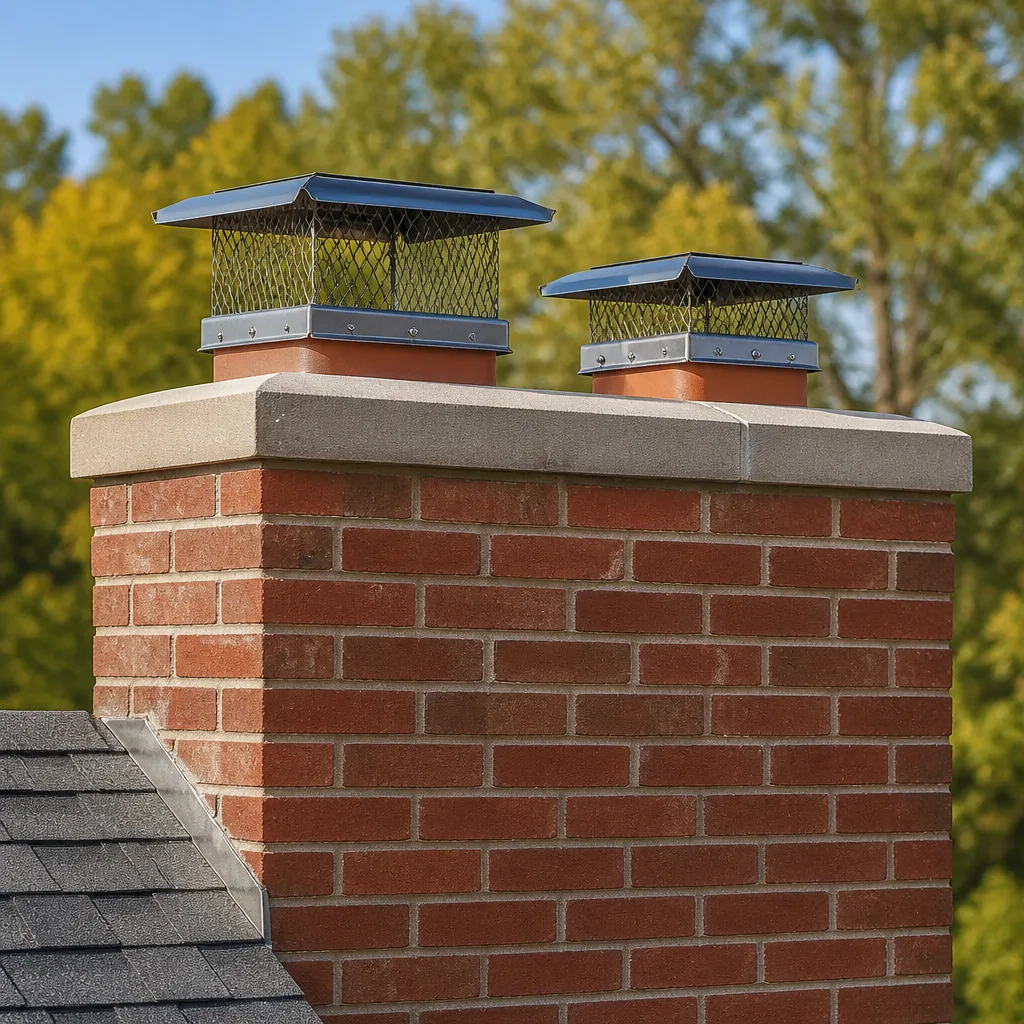 Caps & crowns
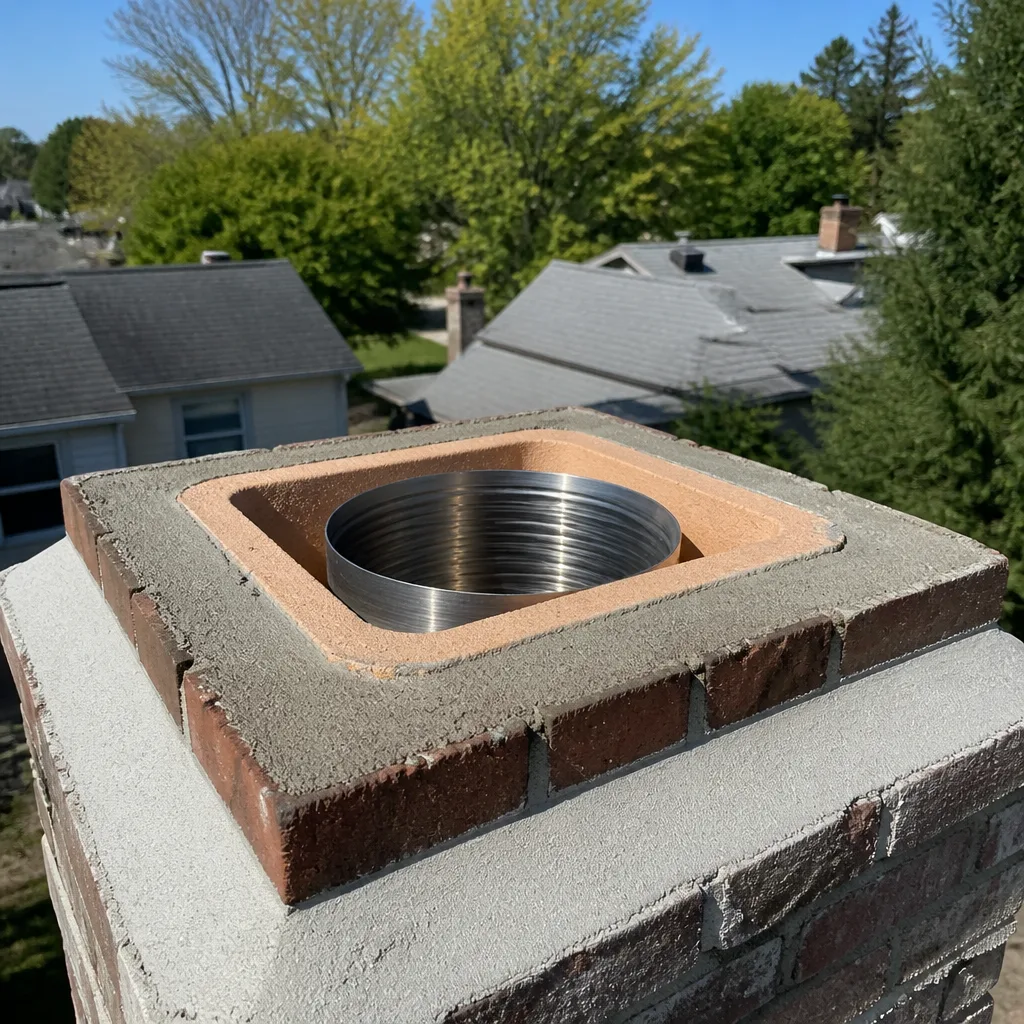 Flue relining
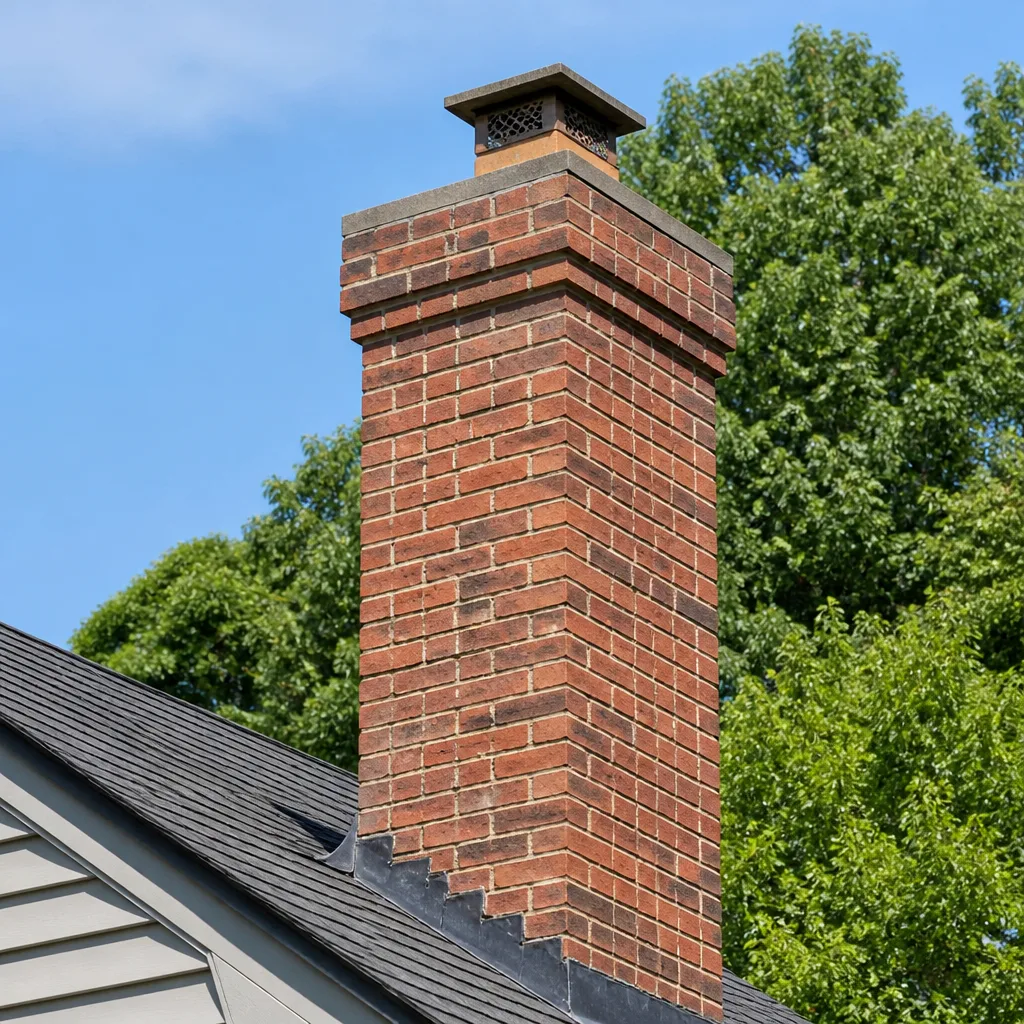 Masonry repair
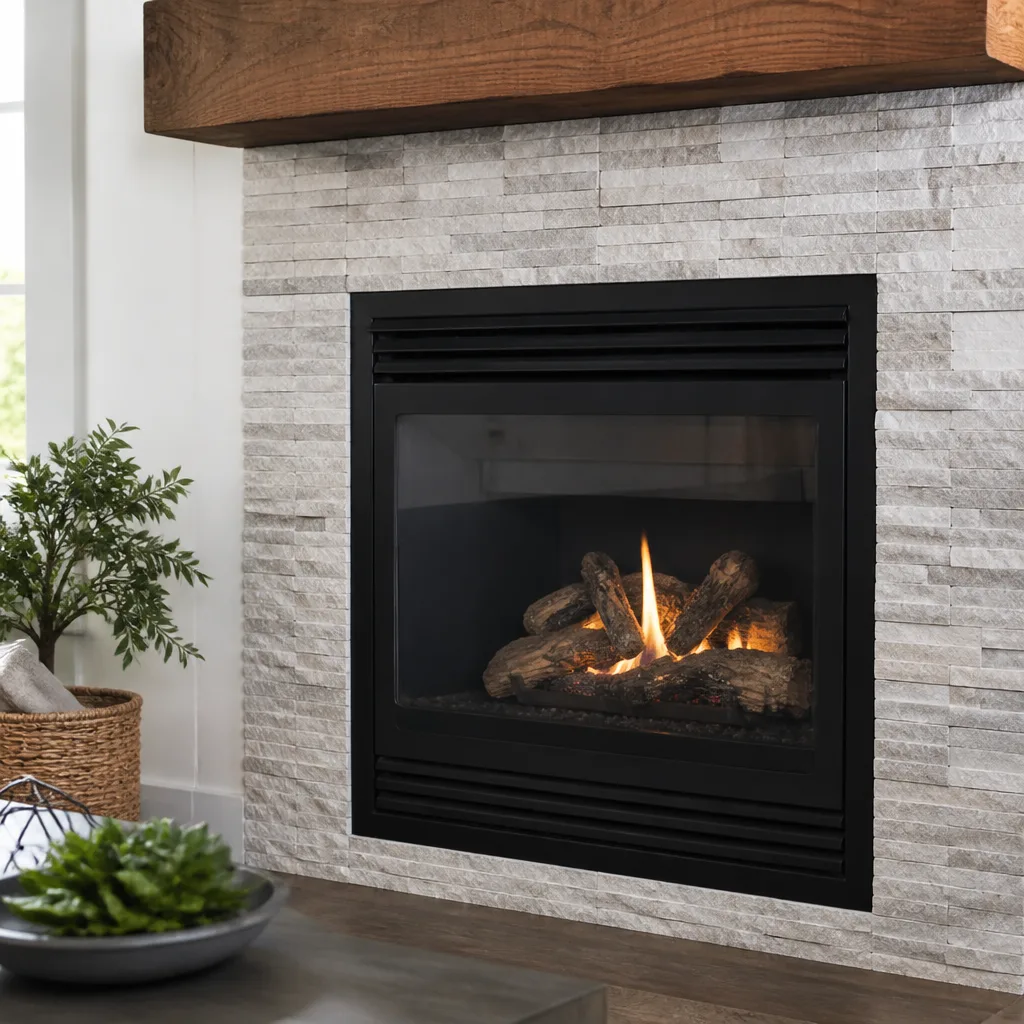 Gas fireplace service
Level 1 sweep and inspection to the NFPA 211 annual standard - flue, crown, cap, and flashing checked and photographed
Chimney sweep logs do not sweep chimneys. They loosen some creosote - which then falls where a brush and vacuum still have to collect it.
Chimney Sweep Maintenance Schedule: What to Do and When
Most chimney reminder postcards land in October. For a New Braunfels homeowner, that timing is backwards. If you sweep a flue in the fall, you’re cleaning a chimney that sat unused through the hottest months, then you light the first fire of the season on the same surfaces you just brushed. The real work, in this climate, happens after the burn, not before it. Here’s the schedule we actually recommend for short, intense Texas winters, what you can check yourself, and the signs that mean calling sooner rather than later.
Quick Answer
The best maintenance schedule for a chimney in New Braunfels is a sweep and Level 1 inspection in February or March, right after the burning season ends, then a homeowner check of cap, crown and damper each spring, with a Level 2 inspection whenever anything changes. Light-to-moderate wood burners generally need one sweep per year. Heavy burners or anyone burning more than a couple of cords should consider two.
Styles & brands we work with
- Sweep & inspection
- Caps & crowns
- Flue relining
- Masonry repair
- Gas fireplace service
Table of Contents
- Why We Recommend a Post-Season Sweep, Not a Pre-Season One
- Month-by-Month Chimney Maintenance Calendar
- What You Can Check Yourself vs. What Requires an Inspection
- How to Track Cord-Wood to Know If You Need Two Sweeps
- What “Annual Inspection” Actually Means Under NFPA 211
- Off-Season Warning Signs That Mean Call Before Fall
- Gas Fireplace Chimney Care: A Different Schedule
- Keeping Records: The Part Most Homeowners Skip
Why We Recommend a Post-Season Sweep, Not a Pre-Season One
If you burn wood four or five months of the year, the residue in your flue builds up slowly. Creosote is a byproduct of incomplete combustion, and its character depends on how you burn. Short, hot fires add less of it than smoldering overnight burns. In a mild climate like New Braunfels, most households burn wood in short bursts: a cold snap in December, another in January, a few weeks in February. Those bursts leave deposits that cool and harden over the summer months.
A February or March sweep clears the flue when the glaze is still relatively fresh. More importantly, it clears the flue before humid spring and summer air interacts with acidic deposits sitting on brick and mortar. Creosote and soot are mildly acidic. Left in place through a Texas summer, they give moisture something to work against all season.
A sweep after the burn is also an inspection at the right moment. Whatever the season did to your chimney is still visible. Cracks in the flue tile, loose mortar, or rust on the damper will show up in March. By October, those same problems have sat for months untreated.
The Advantage of the Post-Season Sweep, in Plain Terms
- Cleaning happens right after the deposits are made, not five months later.
- Inspection catches damage while the cause is still recent and traceable.
- Any needed chimney repair can be scheduled in the shoulder season, well before the next burn.
- The flue sits clean and dry through the summer rather than full of acidic soot.
This isn’t a rule we invented. It’s the pattern our technicians, who have up to 12 years of experience, have seen over and over in New Braunfels. October sweeps work fine in climates with year-round burning. Here, they leave you cleaning a cold flue you just cleaned.
Month-by-Month Chimney Maintenance Calendar
The best way to think about chimney care in New Braunfels is a seasonal loop, not a yearly reminder. The tasks change through the year, and the sequence matters. Here’s the calendar we recommend.
- January – Watch the flue during prime burn season. Note how often you burn, and whether you see smoke spilling into the room or smell strong odors when the fire is going. Both are early signals.
- February – Sweep and inspect. This is the core maintenance event of the year. A sweep plus a Level 1 inspection clears the flue and inspects the accessible parts: the firebox, damper, smoke chamber, flue, and the visible exterior chimney.
- March – Handle repairs found in February. Cracks, loose mortar, or a deteriorating crown are easiest to fix when the weather is mild. Our team can schedule chimney repair without the pressure of a fire waiting on it.
- April – Check the cap, crown and flashing from the ground. A tilted cap or a visible crack in the crown means water is getting in. Call for a look.
- May – Look for efflorescence or rust streaks (see below). White staining on the brick exterior is a moisture clue. Rust on the firebox or damper is another.
- June through August – Off season. Keep an eye on the chimney exterior during storms. Loose caps, cracked crowns and missing flashing become problems faster in summer rain.
- September – Verify your damper operates smoothly before you light the first fire of the season. Test it open and closed. If it sticks or won’t seal, call.
- October – First fire of the season. Watch for smoke spillage. If it happens, that’s your cue for a Level 2 inspection, not a second opinion.
- November and December – Burn season. Burn dry wood, avoid smoldering overnight fires, and keep the firebox clear of ash buildup.
Homeowners in the Hill Country neighborhoods around New Braunfels, like those off Loop 337 or near the Gruene area, tell us the same thing: this schedule feels backwards because the reminder cards arrive in October. But the tasks line up with what actually happens to a chimney here.
What You Can Check Yourself vs. What Requires an Inspection
A homeowner can safely check some chimney components and should never check others. The line is the same one that exists in every trade: eyes on, nothing disassembled, no climbing. Here’s the split.
Checks You Can Do Yourself
- The chimney cap. From the ground, look for a tilted or missing cap. A cap keeps rain, birds and debris out of the flue. If it’s damaged, call.
- The crown. The crown is the concrete cap at the top of the chimney. From the ground, a visible crack or crumbling edge is a clue. Don’t climb up to check it.
- Damper operation. Open and close the damper from inside. It should move freely and seal. If it sticks or won’t close fully, that’s a call.
- Visible signs of moisture. Rust on the firebox, water stains on the damper, or white staining on the brick exterior. All are clues (see off-season signs below).
- Smoke behavior on your first fire. Smoke pushing into the room rather than up the flue is a problem worth a professional look immediately.
Checks That Require a Level 1 or Level 2 Inspection
- Flue interior. A Level 1 inspection includes a visual check of the accessible flue. The flue lining is where most chimney failure happens. A cracked flue tile lets heat and carbon monoxide into the structure.
- Smoke chamber and damper assembly. These are visible only with the lighting and tools a professional uses.
- Crown and flashing. A professional check includes inspecting the crown and flashing carefully. Most water damage starts there.
- Level 2 inspections. A Level 2 inspection adds a video scan of the flue. It’s called for when you’ve changed something about the chimney or fireplace, when you’ve had a chimney fire, or when you’re buying or selling a home.
If checking the crown or cap from the ground makes you nervous, that’s the right instinct. Don’t get on the roof for this. A trained chimney professional has the tools and the safety equipment to look at things safely.
How to Track Cord-Wood to Know If You Need Two Sweeps
Most homeowners are told “one sweep per year” and stop there. In practice, how much you burn determines how often the chimney actually needs sweeping. Here’s how to track it.
One cord of firewood is a stack 4 feet high, 8 feet long and 4 feet deep. Most light-to-moderate burners in New Braunfels go through half a cord to a full cord per season. If you’re in that range, one sweep per year after the season is usually enough.
You’re likely in the “consider two sweeps” category when any of the following apply:
- You burn more than two cords in a season. At that level, deposit buildup in the flue happens faster, and a single spring sweep may not be enough.
- You burn a fire most nights from November through February. Frequency adds up, and so does creosote.
- You’ve seen glazed creosote. A shiny, tar-like deposit on the flue wall is a red flag. It burns hot and is harder to remove. If a sweep reveals it, the chimney needs attention sooner than the next annual cycle.
- You’ve had a chimney fire. Even a small one leaves damage. A Level 2 inspection should follow, and the sweep schedule should shift to two per year for a season at minimum.
Our technicians measure the flue after every sweep. We tell you how much came out, what kind of deposit it was, and whether one sweep per year is a good schedule for your burning habits. If a second sweep is warranted, we’ll say so plainly.
A chimney sweep isn’t a one-size measurement. It’s an assessment, and the assessment is where the schedule comes from.
What “Annual Inspection” Actually Means Under NFPA 211
Most homeowners hear “annual inspection” and picture a technician with a flashlight looking at the firebox. Under NFPA 211, the standard that governs chimney inspection, an inspection is a specific service with three defined levels. The difference matters for your schedule and for any insurance claim.
The Three Levels of Chimney Inspection
- Level 1. A visual inspection of the readily accessible chimney components: the firebox, damper, smoke chamber, flue and visible exterior. This is what most homeowners get annually, and it’s appropriate when the chimney has been used in an established pattern with no change.
- Level 2. Adds a video scan of the flue interior and inspection of accessible attic, crawlspace and other concealed areas. Called for when there’s a change: a new appliance, a chimney fire, a real estate transaction, or a change in fuel type.
- Level 3. Includes removal of components to inspect concealed areas. Rare, and usually prompted by an identified hazard that must be investigated.
Here’s what most homeowners assume: “annual inspection” means a quick look and a signature. That’s not what NFPA 211 describes. An annual Level 1 inspection should include a documented look at all readily accessible components. If you’re filing an insurance claim after a chimney fire, the level of inspection on record often determines what your insurer can verify.
In our experience, this is where a professional chimney inspection pays for itself. The documentation from a proper Level 1 inspection is worth more than the inspection itself. That’s why Beacon Chimney Sweep provides photo documentation with inspections. Our team works with HeatShield for flue resurfacing and DuraFlex for flexible liners. When an inspection finds a problem, we already have the materials and the knowledge to fix it, with no second contractor needed.
If you’re in New Braunfels and haven’t had an inspection in over a year, that’s your first call. Call (888) 401-6898. We answer 24/7. Fast dispatch from 7am to 7pm, Sunday through Friday.
Off-Season Warning Signs That Mean Call Before Fall
Most chimney problems announce themselves in the off-season, when the house is quiet and the fire isn’t masking them. If you see any of these, don’t wait for the next annual sweep.
- White efflorescence on brick. A powdery white stain on the exterior chimney brick is a moisture clue. It means water is getting into the masonry and drawing minerals to the surface. The cause is usually a cracked crown, failing flashing, or a missing cap.
- Rust streaks on the firebox, damper or exterior metal. Rust on any part of the chimney that shouldn’t be wet means water is entering the flue or the firebox. Left alone, rust weakens the damper and shortens the life of the liner.
- Spalling mortar and brick. When mortar crumbles or brick faces chip off, that’s masonry damage from moisture. It won’t fix itself, and it usually gets worse through the summer rains.
- Strong odors when it rains or on humid days. A sour smell from the firebox is often a sign that deposits are drawing moisture from the air, or that water is entering the chimney structure.
- A chimney cap that looks tilted or missing from the ground. The cap is the first line of defense against water and animals. A missing cap means a direct path for water into the flue.
- Damper that won’t open or close fully. A stuck damper can mean rust or warping. Both are worth a look before the burn season.
Any of these is reason enough to call Beacon Chimney Sweep in New Braunfels. We’ll tell you what we found, what it means, and what it’ll take to fix it, with no upsell. The estimate is free. Call (888) 401-6898.
Gas Fireplace Chimney Care: A Different Schedule
A gas fireplace doesn’t produce the creosote a wood fire does. That doesn’t mean the chimney needs no attention. Gas fireplaces vent exhaust and moisture, and the flue still needs a check.
The gas fireplace schedule differs in these ways:
- Annual inspection is still warranted. A Level 1 inspection on a gas fireplace is still called for most years. The vent, cap, and damper all need a check.
- The firebox and burner need checking. Soot or debris in a gas firebox can indicate incomplete combustion or a blocked vent.
- No annual sweep of the flue is typically needed. A gas fireplace doesn’t create creosote. But a sweep is called for if the inspection finds debris, animal nesting, or a blockage.
Many New Braunfels homes have both a wood fireplace and a gas fireplace. Each needs its own schedule. If you’re unsure which type of chimney care is right for your home, call and describe what you have. We’ll tell you what applies.
Keeping Records: The Part Most Homeowners Skip
Most homeowners don’t keep chimney records. When a problem comes up, they don’t remember when the last sweep was or what the last inspection found. That’s a problem, especially if you’re dealing with insurance.
A simple record does the job:
- Keep the inspection report and any photo documentation from each annual service.
- Note the date of each sweep and roughly how much deposit came out.
- Keep a note of any repair performed and the materials used.
- Note the approximate cord-wood burned each season.
When we complete a service at Beacon Chimney Sweep, we provide documentation with photos. If you ever sell the home or file a claim, that’s the record that matters.
Common Mistakes to Avoid
- Waiting for a pre-season reminder card. October sweeps make sense in colder climates. Here, a February or March sweep after the burn season is the schedule that actually matches how homeowners burn.
- Assuming one sweep per year fits every household. If you burn more than two cords per season or burn most nights through the winter, your flue needs more attention than an annual single sweep. Track your wood.
- Skipping the inspection because the sweep looked fine. The sweep clears the flue. The inspection checks the components the sweep can’t see (the damper assembly, the crown, the flashing, the flue liner). Both matter.
- Not getting a Level 2 inspection after a chimney fire. A Level 1 inspection doesn’t include a video scan of the flue. After any fire event, the standard calls for Level 2.
- Ignoring off-season signs until the fall. White efflorescence, rust streaks and spalling mortar get worse through the summer. Handling them early is less expensive than handling the resulting damage.
- Not documenting what has been done. If you ever file an insurance claim or sell the home, the record of your annual inspections matters more than the inspections themselves.
- Calling a general handyman to “look at the chimney.” Chimneys are a specialist topic with code requirements and real fire risk. Hire a chimney-specific professional, not a general service.
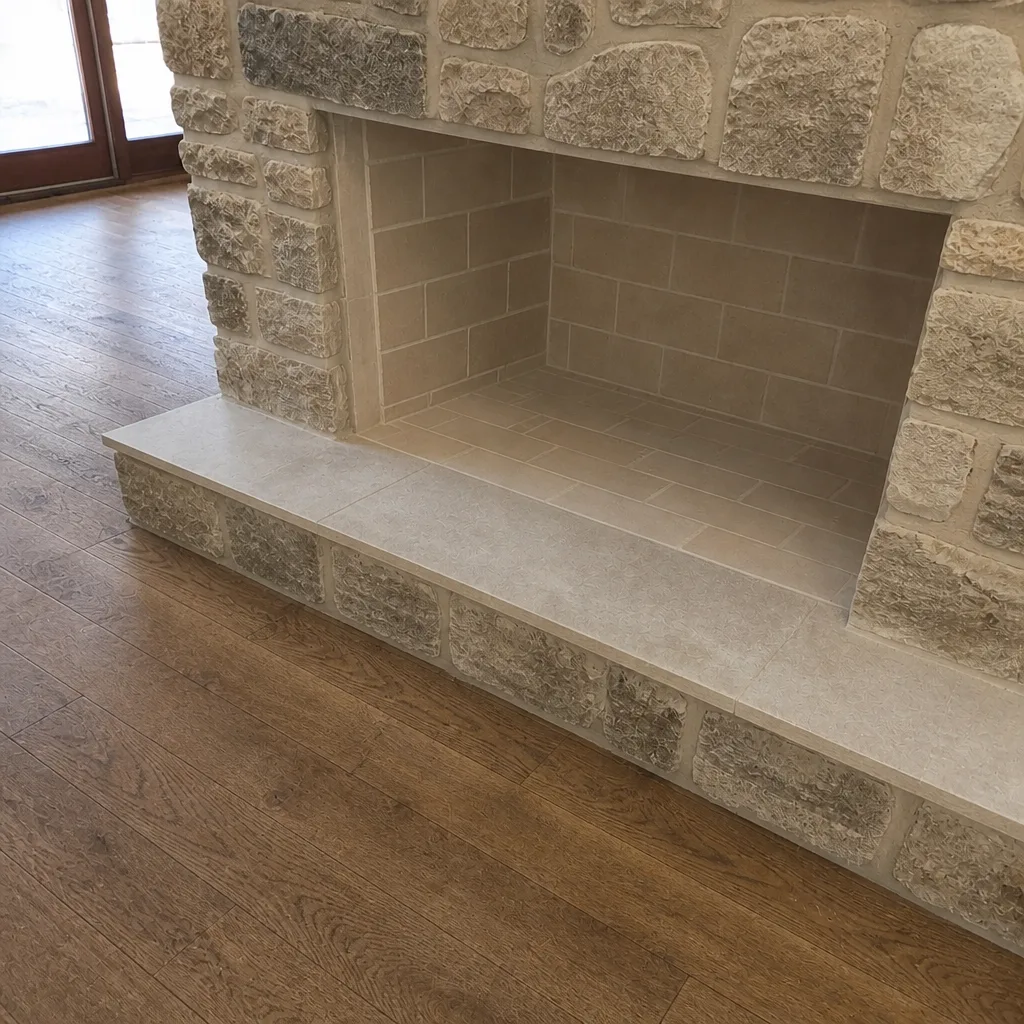
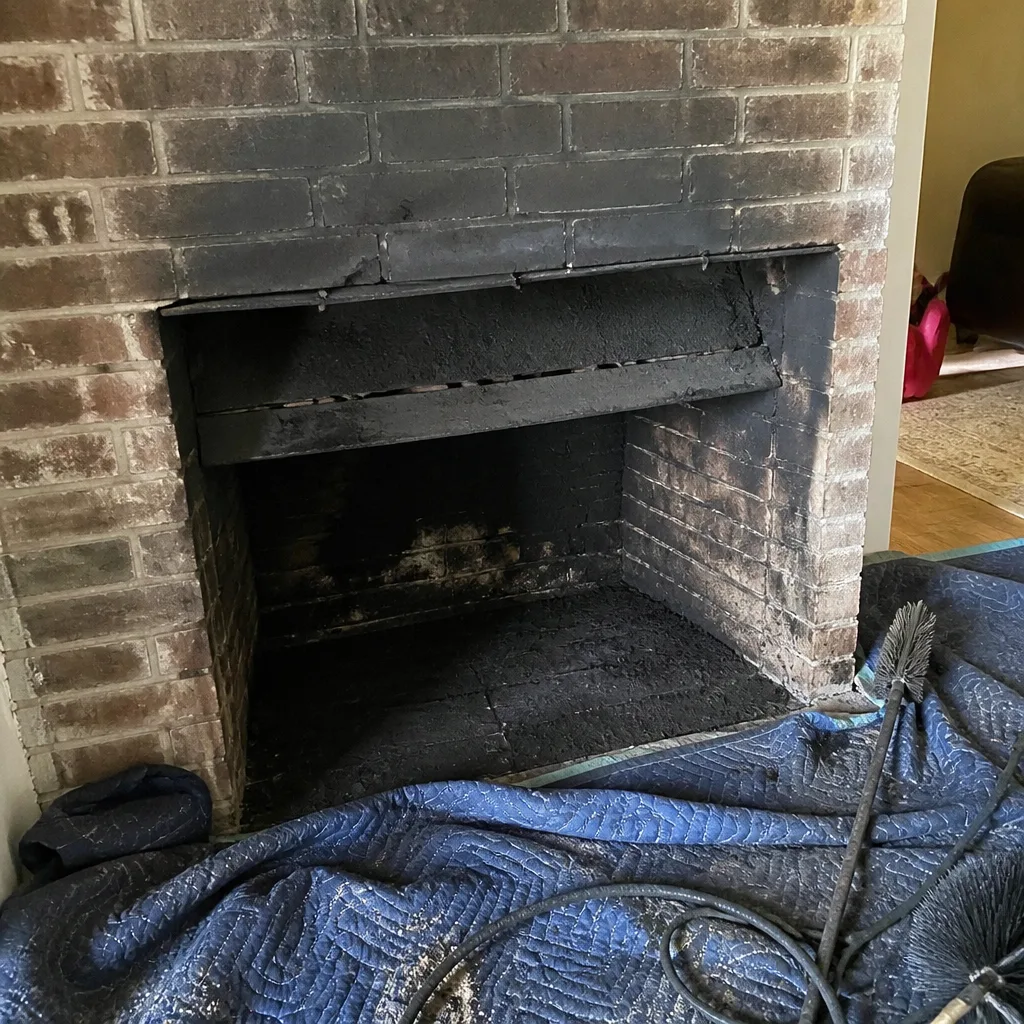
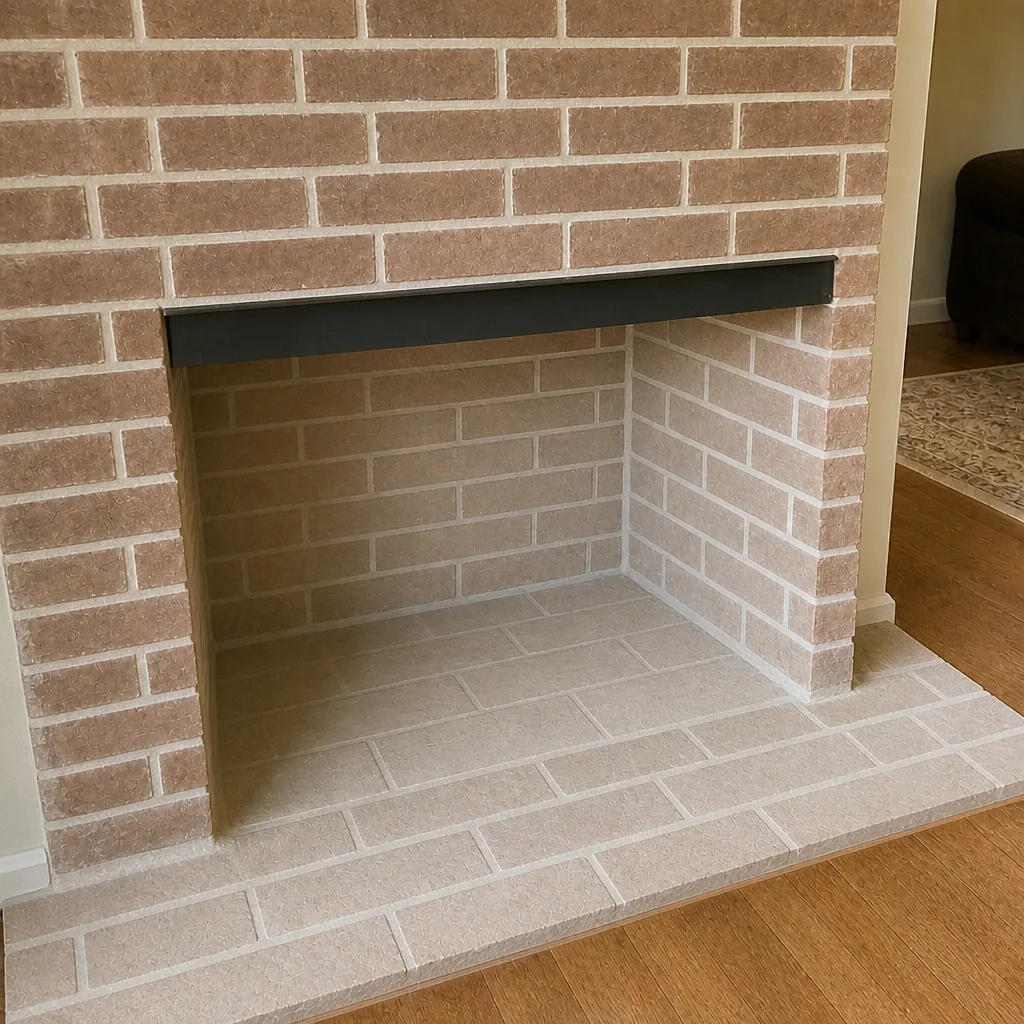
See the difference
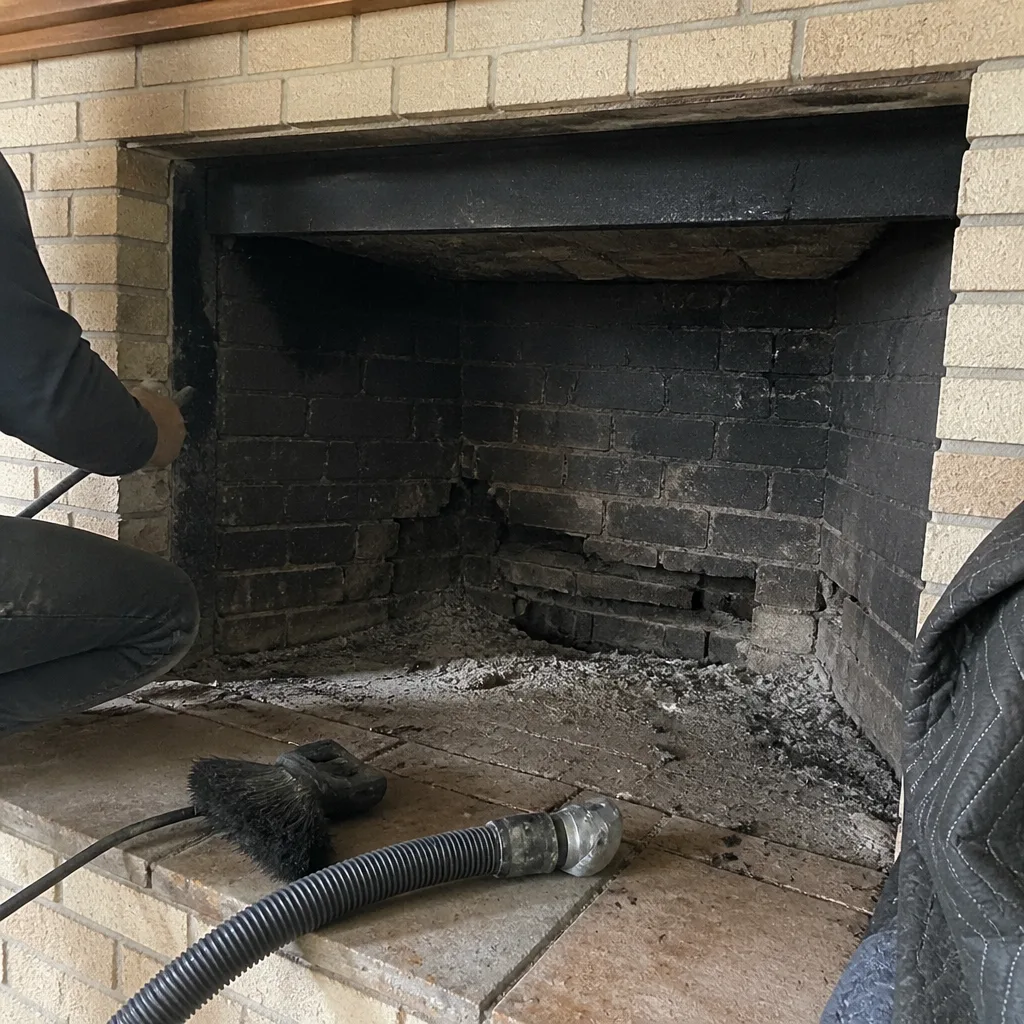 Before
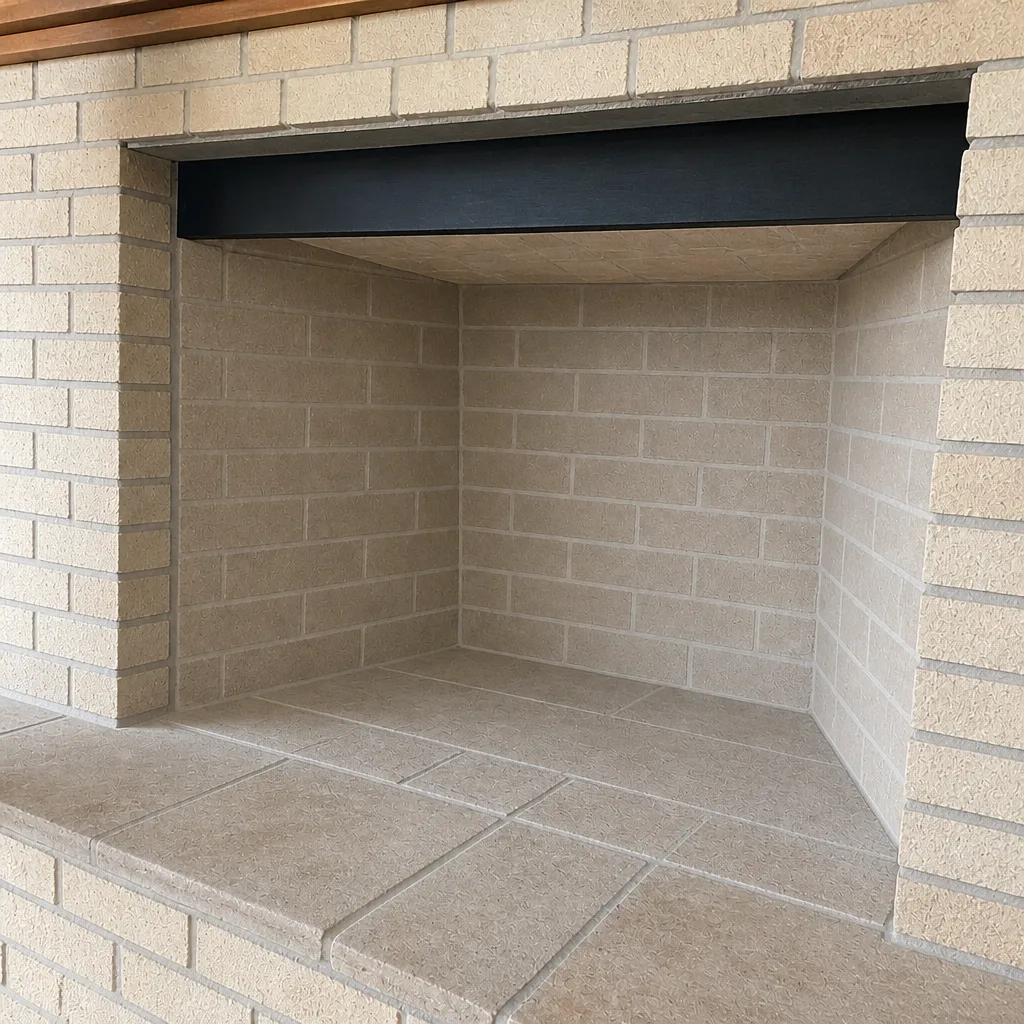 After
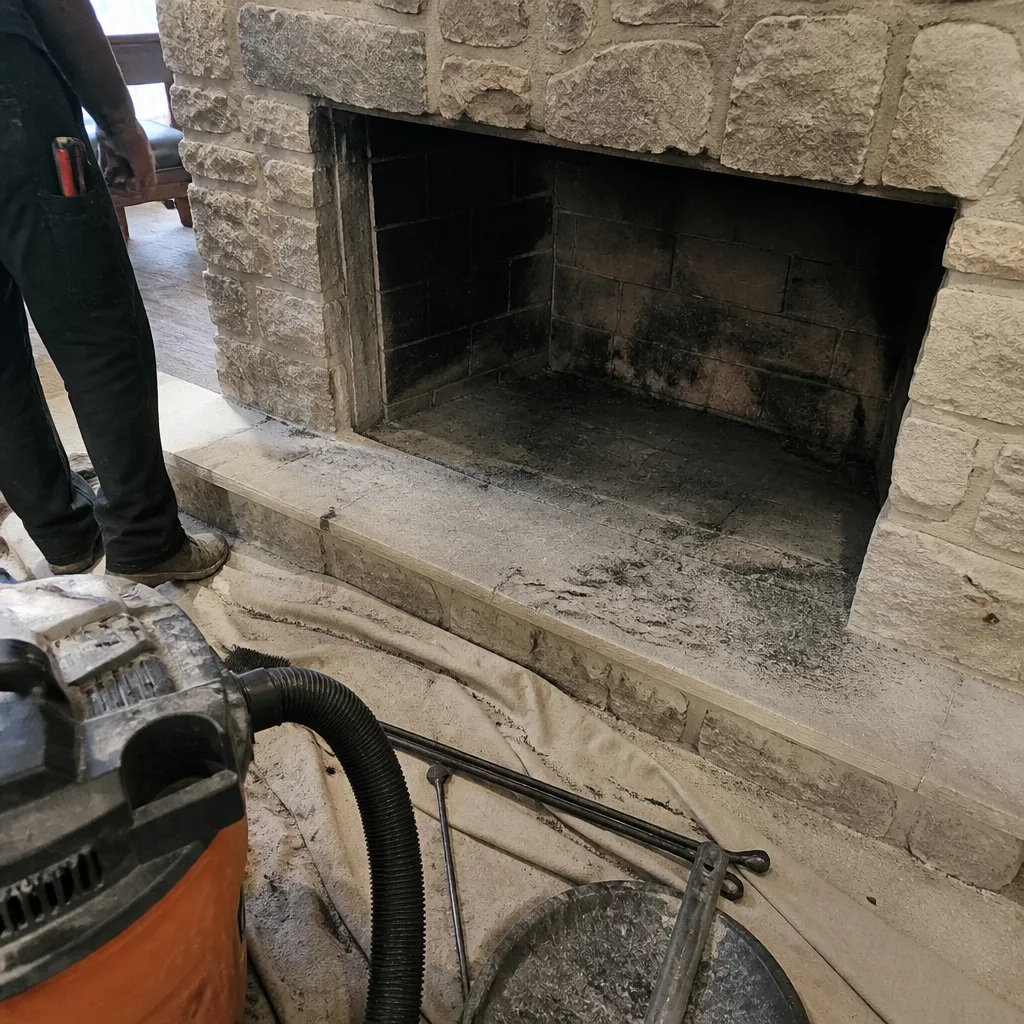 Before
 After
 Before
 After
When to Call a Professional
Some jobs are homeowner tasks and some are calls for a trained chimney professional. If you see any of the following, call sooner rather than later: white efflorescence or rust streaks appearing for the first time, spalling mortar on the exterior chimney, a chimney cap that looks tilted or missing, a damper that sticks or won’t close, smoke spilling into the room on a first fire, or any chimney fire (even a small one). Each is a reason to have a professional look, not a reason to wait for the next annual reminder.
Chimney work is a fire and carbon monoxide hazard topic. It’s not the place to guess. Our team works exclusively on chimneys: sweeping, inspection and repair. If a repair is needed, we handle it with materials from DuraFlex, HeatShield, Gelco, Olympia Chimney, Famco and Copperfield. The diagnosis and the fix come from the same team.
Beacon Chimney Sweep offers free estimates in New Braunfels. Call (888) 401-6898. We answer 24/7. Fast dispatch from 7am to 7pm, Sunday through Friday.
Frequently Asked Questions
Once a year is the baseline for most households, typically in February or March after the burn season. If you burn more than two cords per season or burn a fire most nights through the winter, consider two sweeps per year. Watching your cord usage is the best way to know which category you fall into. Call (888) 401-6898 for an exact quote; estimates are free.
A post-season sweep clears deposits right after the burn season, before they sit through a humid New Braunfels summer. A pre-season sweep in October clears a cold flue you just cleaned and then leaves the deposits to sit for months. The post-season timing is more effective for the light-to-moderate burning pattern typical in this climate.
Under NFPA 211, an annual inspection should be at least a Level 1 inspection, which covers the readily accessible chimney components: firebox, damper, smoke chamber, flue and visible exterior. It’s more than a quick look, and it should be documented. If anything about your chimney has changed (a chimney fire, new appliance, real estate transaction), a Level 2 inspection with a video scan is called for instead.
White efflorescence on exterior brick, rust streaks on the firebox or damper, spalling mortar, or a damper that won’t close are the main off-season warning signs. Any one of these means water or damage is present, and it will usually get worse over the summer. Call (888) 401-6898 for an exact quote; estimates are free.
Yes. Even occasional burning produces some soot and creosote, and the annual inspection check is still worthwhile to catch problems (a cracked flue tile, a failing crown, a stuck damper) before they become larger. If you burn a few fires per year, one sweep per year after the season is usually enough.
Skipping maintenance lets deposits harden, moisture damage accumulate and small problems become structural ones. A neglected chimney isn’t a cosmetic issue. Creosote buildup and carbon monoxide are real fire and health hazards, and an annual sweep and inspection is the schedule that keeps them in check. If you’re overdue, call and schedule an inspection.
The Bottom Line
The right chimney maintenance schedule for New Braunfels isn’t the one on a fall reminder card. It’s a post-season sweep in February or March, a Level 1 inspection on the same visit, and a homeowner check of cap, crown and damper each spring. If you burn more than two cords per season, consider two sweeps per year, and track your wood to know which category you’re in. Watch the off-season for efflorescence, rust and spalling mortar, and call before fall if you see any of them. An annual inspection is more than a quick look, and it’s worth documenting. Our team does the sweep, the inspection and any repair, from the firebox to the crown cap.
Call (888) 401-6898. We answer 24/7. Fast dispatch from 7am to 7pm, Sunday through Friday. The estimate is free, and we’ll tell you exactly what we found, what it means, and what it’ll take to fix it.
Written by the team at Beacon Chimney Sweep.