
Last updated November 15, 2026
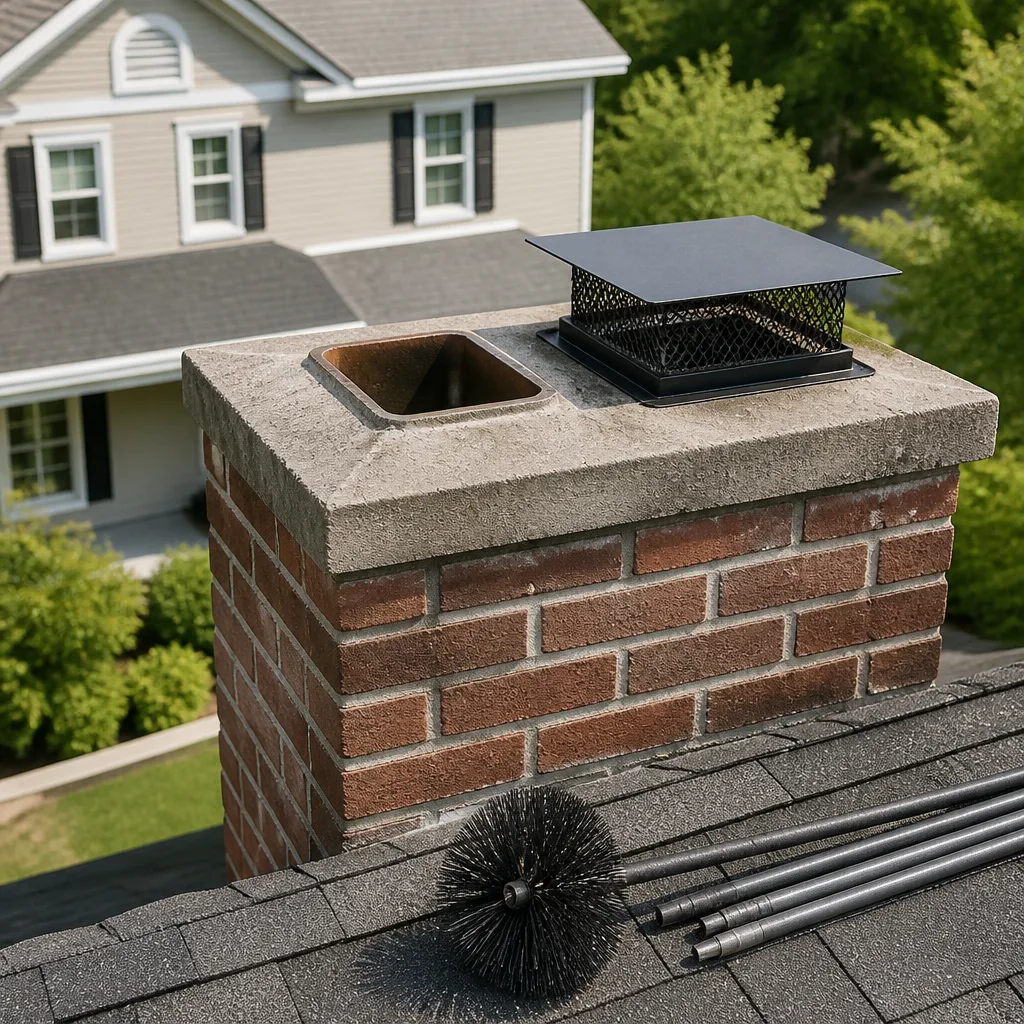 Sweep & inspection
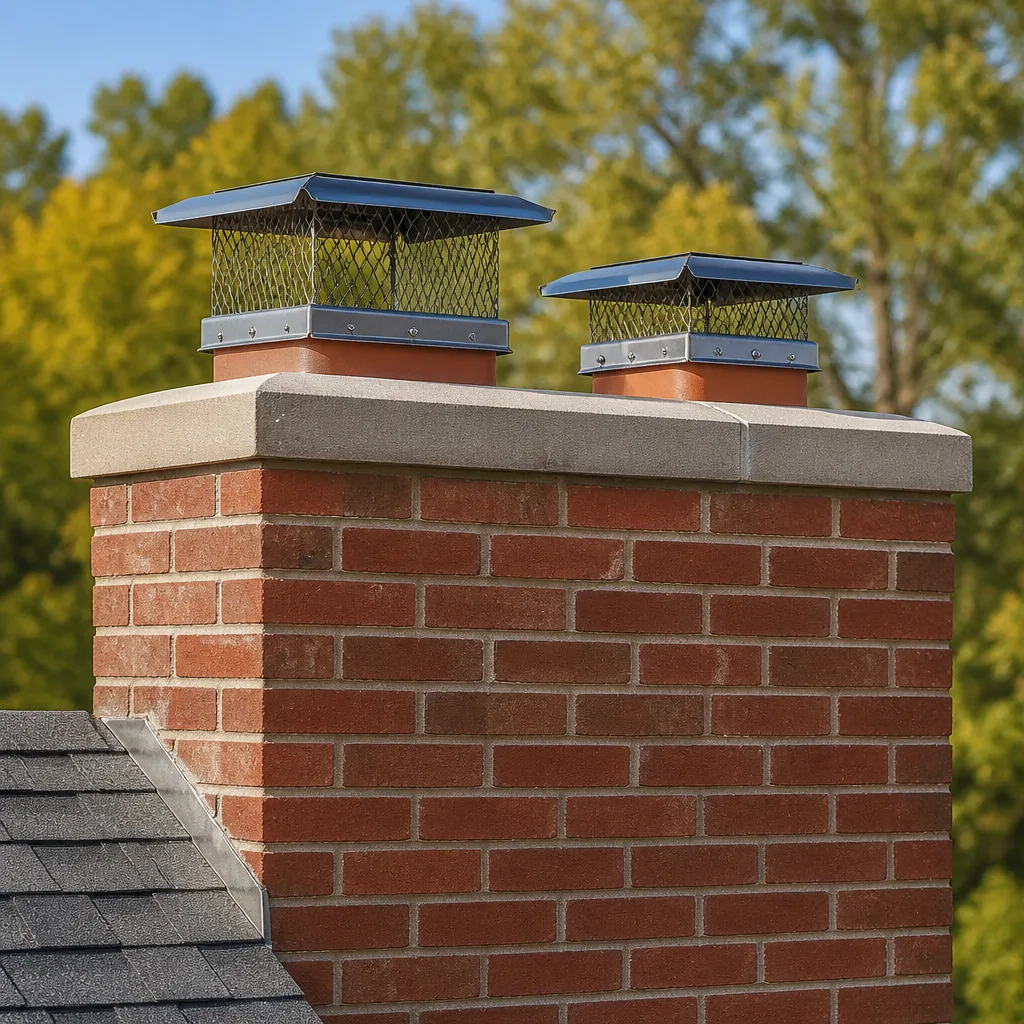 Caps & crowns
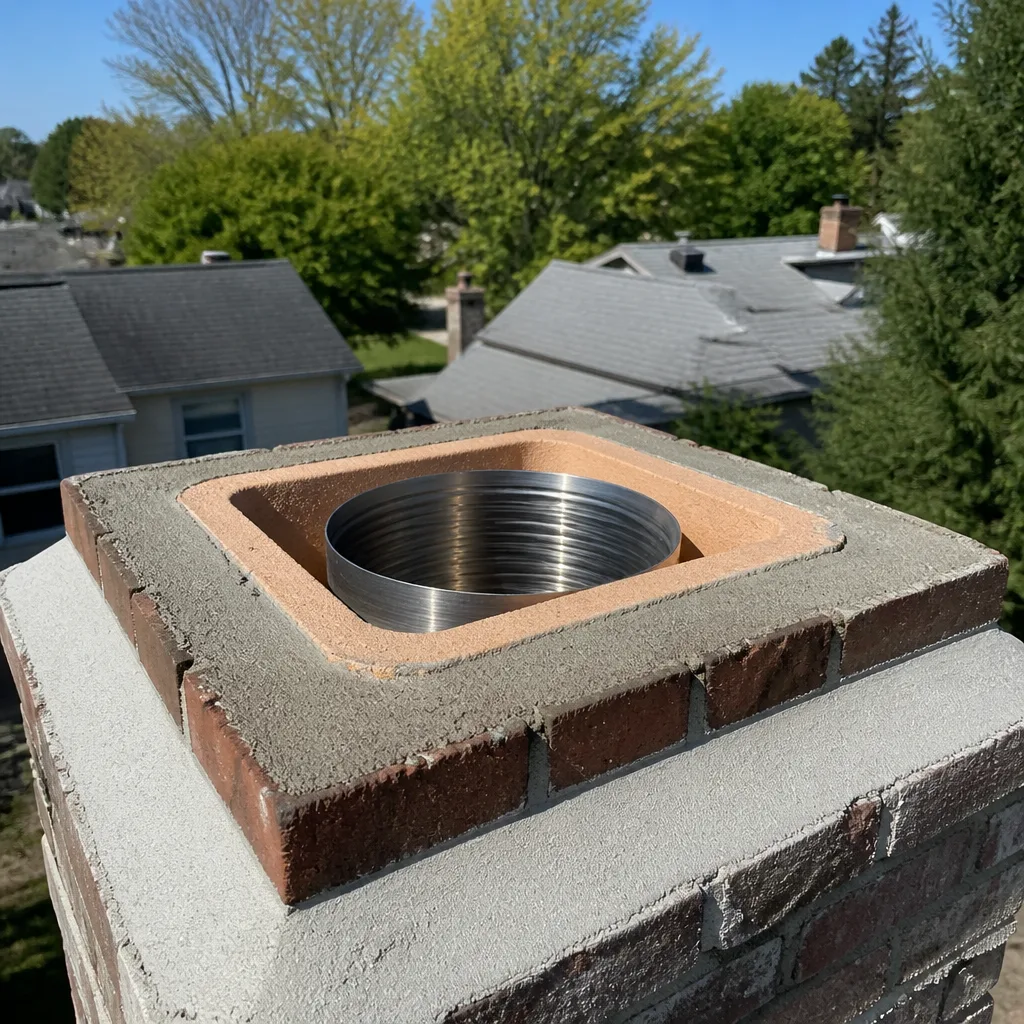 Flue relining
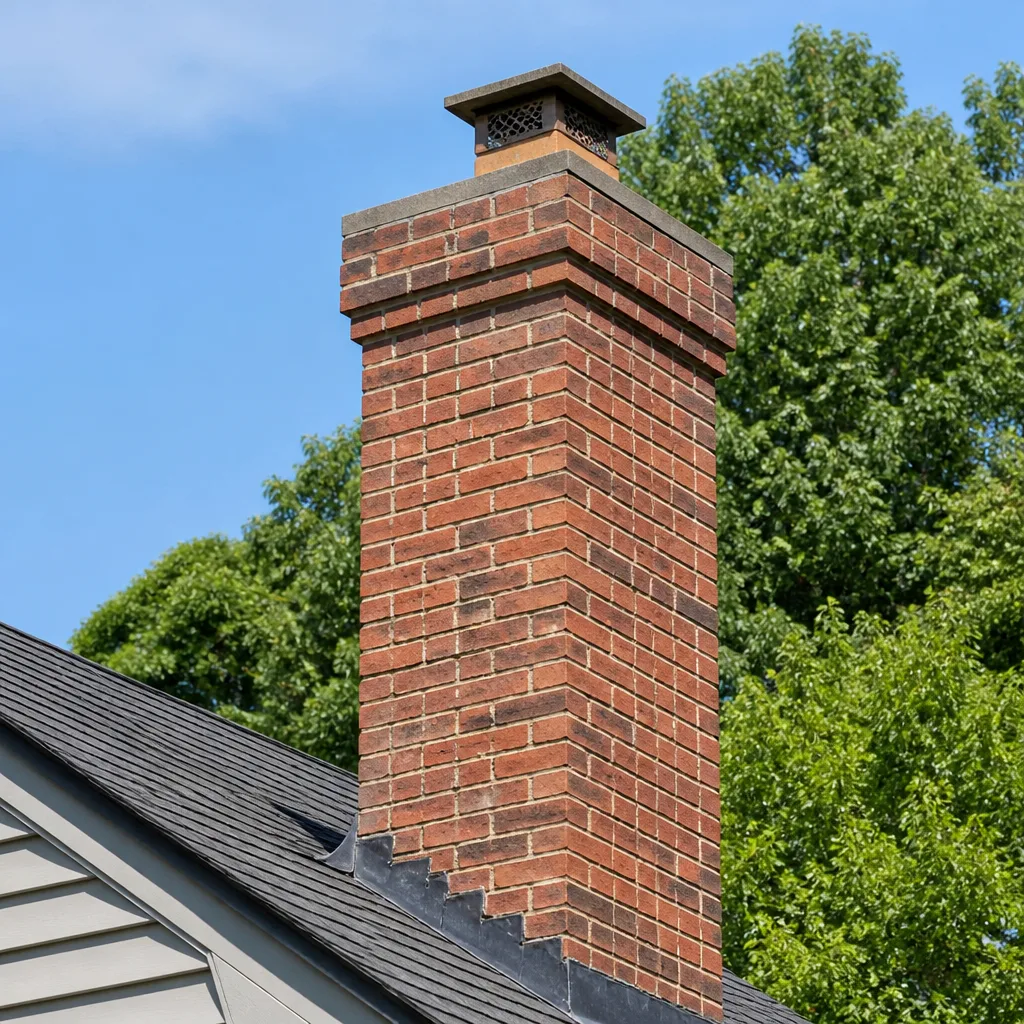 Masonry repair
 Gas fireplace service
Level 1 sweep and inspection to the NFPA 211 annual standard - flue, crown, cap, and flashing checked and photographed
Chimney sweep logs do not sweep chimneys. They loosen some creosote - which then falls where a brush and vacuum still have to collect it.
Chimney Cleaning Permits, Codes & Inspections in New Braunfels, TX: What You Need to Know
A chimney relining job done without the required permit doesn’t just risk a fine. It can void your homeowner’s insurance coverage for fire damage, and that’s a claim you won’t get a second shot at. Most homeowners assume any chimney work is routine maintenance and falls under the same rules as a sweeping. That’s the misconception this guide untangles. Sweeping, by itself, almost never needs a permit. But the repairs an inspection turns up often do, and the line between the two is where New Braunfels homeowners get tripped up. Here we’ll walk through what Texas actually classifies as maintenance versus alteration, how the City of New Braunfels and Comal County permit offices handle chimney work, what NFPA 211 has to do with your local code, and what it costs to resolve unpermitted work that surfaces during a home sale.
Quick Answer
Routine chimney sweeping is maintenance and does not require a permit in New Braunfels. Chimney repair, relining, flue resurfacing, and cap installation are alterations or repairs under the International Residential Code (IRC), and those may require a permit from the City of New Braunfels or Comal County before work begins. An inspection is the step that tells you which category your chimney falls into.
Styles & brands we work with
- Sweep & inspection
- Caps & crowns
- Flue relining
- Masonry repair
- Gas fireplace service
Table of Contents
- Maintenance vs. Alteration: Where the Permit Line Sits
- How Texas Adopts the IRC and What It Means for Your Chimney
- New Braunfels and Comal County Permit Offices: What Triggers a Required Inspection
- NFPA 211 and Local Code: How the Two Work Together
- Code Compliant for Older New Braunfels Homes That Predate the Current IRC
- How Unpermitted Chimney Work Surfaces During a Home Sale
- The Three Levels of Chimney Inspection and When Each Applies
- What Paperwork You Should Keep (and Why It Matters)
Maintenance vs. Alteration: Where the Permit Line Sits
The single most useful distinction for a chimney owner is between maintenance and alteration. Maintenance is work that keeps an existing, compliant system performing as designed: sweeping soot and creosote out of the flue, cleaning out the firebox, and clearing debris from the smoke chamber. Alteration is work that changes the chimney’s structure, its venting capacity, or the material it’s built from. That second category is where permits usually enter the picture.
In our experience across New Braunfels homes, the work most often misclassified by homeowners is the repair work that naturally follows an inspection. A sweeping cleans. An inspection finds. The repair fixes, and repairs can be permitted work.
Here’s the general breakdown:
- Usually maintenance, no permit: Annual sweeping, firebox cleanup, cap and screen cleaning, damper lubrication, and visual inspection.
- Often permitted as repair or alteration: Relining a flue, resurfacing a deteriorated smoke chamber or flue with HeatShield, replacing a damaged cap system, and cutting in a new flue for a stove insert.
That middle category is not optional plumbing. A DuraFlex liner installed for a stove insert changes the flue’s geometry and its listed venting configuration. A copperfield cap replacement changes the crown-to-flue termination. Both are structural changes to the chimney system, not housekeeping. When we install a liner or perform flue resurfacing in New Braunfels, we treat it as alteration work and advise accordingly.
The practical rule: if a technician is changing what’s physically there, ask about a permit before signing. If they’re only cleaning what’s already there, you almost certainly don’t need one. And when in doubt, the inspection report tells you which side of the line you’re on.
How Texas Adopts the IRC and What It Means for Your Chimney
Texas has no statewide residential building code. Local jurisdictions adopt their own versions, and most, including New Braunfels, work from the International Residential Code. The IRC devotes a chapter to chimneys and vents, and that chapter is where the permit question lives. It defines how chimneys must be constructed, how they must be separated from combustibles, and how flues must be listed and installed. Every inspection we do is measured against that standard.
What matters for permits is how a jurisdiction adopts the code, not the code’s existence. Some cities adopt the IRC with local amendments. Some accept it by reference. Because New Braunfels is in Comal County, and the county has its own permitting posture, the specific rules can differ across the metro. The IRC is the shared language, but the office that enforces it can differ by address.
Here’s what we tell homeowners who ask:
- Identify which permitting authority controls your address: the City of New Braunfels or Comal County.
- Call that office and describe the work in their language, not ours. Say “relining my flue” or “replacing the chimney cap,” not “fixing my chimney.”
- Ask directly whether the work requires a permit and whether any inspection is required after the work.
- Get the answer in writing or at least note the name of the person you spoke to and the date.
That last step matters. If a question comes up later at resale, a note documenting the call is worth more than a memory. The IRC sets the technical requirement, but the local office sets the process. When you call us for a chimney sweep, we’ll tell you plainly which categories of work your chimney actually needs, so you know what to ask the city about.
New Braunfels and Comal County Permit Offices: What Triggers a Required Inspection
The City of New Braunfels operates a permitting office that handles residential construction permits, and Comal County has its own permitting process for unincorporated areas. If your home is inside the city limits, the city office is your first call. If you’re in the county, you’ll want to confirm whether your address falls under county permitting. Either way, the trigger question is the same: is the chimney work structural or mechanical?
Everything we do in New Braunfels runs through the same three-service model – clean, inspect, repair – and the permit question only arises at the repair stage. For the homeowner, the sequence looks like this:
- Sweep. No permit. This is routine maintenance.
- Inspect. No permit. The inspection is the diagnostic step.
- Repair. Now you ask the permitting office whether the specific repair requires a permit.
Inside the city, address your questions to the City of New Braunfels building official. They can tell you whether a reline, a cap replacement, or flue resurfacing requires a permit for your address, and whether the work must be inspected afterward. The inspection step is often the one homeowners miss: it’s not enough to get the permit. The work has to be inspected before the permit is closed. Skipping the inspection can leave an open permit on the record.
For homes in the county, Comal County’s permitting office is the point of contact. The county process may differ from the city’s, so confirm before booking. None of this takes long, and it’s the single step most often skipped. A short call saves a lot of explanation later. More background on getting a sweep booked is on our Beacon Chimney Sweep page.
One more piece of context matters here. New Braunfels winters are mild, but that doesn’t mean the chimney stays idle. Burning season runs long enough that creosote accumulates between cleanings, and a chimney that’s been used for years without a sweep is more likely to need repair work – which is precisely when the permit question surfaces.
NFPA 211 and Local Code: How the Two Work Together
NFPA 211 is the national standard for chimneys, fireplaces, vents, and solid-fuel-burning appliances. The IRC references it heavily. So when a local inspector opens a chimney installation, they’re often checking the work against NFPA 211’s requirements, even though the standard isn’t a law. That’s why a chimney repair can pass a city inspection and still fail the standard a home inspector applies years later. Understanding the difference helps you keep both aligned.
NFPA 211 covers the things inspectors actually look at:
- Clearances between the chimney and combustible materials.
- Flue sizing relative to the appliance.
- The condition of the flue liner – whether it’s intact, listed, and properly installed.
- Terminations and cap requirements.
- Connector requirements for solid-fuel appliances.
In our experience, NFPA 211 is the standard that catches what a routine city inspection might not look at closely. A flue with a hairline crack might pass a visual city check and fail an NFPA 211 inspection because the crack isn’t visible from the roof. That’s why we use a camera inspection and include a photo report with every sweep. We want you to see what we see, and we want the evidence in the report to be something you can hand to an inspector, a home buyer, or an insurer without translation.
The practical takeaway: when a repair is permitted, the city inspection confirms the work was done as permitted. NFPA 211 confirms it was done to the standard. A good contractor is aiming at both. If someone performing work on your flue can’t tell you which standard they’re installing to, that’s a warning sign. Our chimney repair work starts with the inspection report so the standard is agreed on before anything is installed.
Code Compliant for Older New Braunfels Homes That Predate the Current IRC
A “code compliant” chimney on a New Braunfels home built decades ago is not the same thing as a chimney built today. Older homes were constructed under older codes, and many older chimneys were built without the liner systems we now use as standard. That gap is not automatically a defect. But it matters when you sell, when you insure, and when you repair.
Here’s what we see when we inspect an older chimney in New Braunfels:
- Single-wythe brick flues with no listed liner.
- Flues sized for older appliances that don’t match the size of a modern stove or insert.
- Mortar joints that have deteriorated above the roof line.
- Caps that were never installed, or were installed decades ago and are now rusted through.
None of these necessarily mean you have to rebuild. Several are solvable with a listed liner system, and a HeatShield resurfacing can restore the flue surface without a full liner replacement. But the solution depends on what the inspection finds. On an older chimney, a camera inspection is the only way to know. A sweeping alone won’t reveal a liner that’s failing behind the soot.
When you’re considering a repair on an older chimney, ask two questions: Will the proposed repair bring this flue up to the current standard, and does it require a permit? A contractor who can answer both is doing more than patching. On homes in New Braunfels, we routinely find that the right repair is the one that resolves the specific deficiency rather than replacing the entire chimney. That’s why we quote per job after the inspection – the written estimate sets the final price.
How Unpermitted Chimney Work Surfaces During a Home Sale
Unpermitted chimney work doesn’t stay hidden. It surfaces during a home sale, and it almost always surfaces in the buyer’s inspection report. A home inspector looking at a chimney notes what they can see from the roof, the firebox, and the attic. What they’re checking is whether the flue is lined, whether the liner appears properly installed, and whether any recent work was done without documentation. A newer-looking liner on an older chimney invites the question: was this permitted?
That question is where the complication starts. If the work was permitted and inspected, you show the permit and the inspection record. If it wasn’t, the buyer’s lender or insurer may ask for documentation that doesn’t exist. At that point, the resolution is usually a professional inspection and, depending on the findings, retroactive permitting or remediation. That’s not a cheap or fast conversation to have mid-closing.
If you’re selling a New Braunfels home and the chimney has had repair work, gather the paperwork now:
- Find the original permit and the final inspection record, if they exist.
- Find any inspection reports from that work. A camera inspection report with photos is the most useful document.
- If no paperwork exists, get a fresh inspection before listing. The report becomes your documentation.
- If the inspection finds issues, get them resolved before the buyer’s inspector finds them for you.
The cost to resolve unpermitted work retroactively depends on what the work was and what the local office requires. There’s no standard figure – it varies by address and by scope. What we can tell you is that resolving it before the sale is far less disruptive than resolving it mid-closing. If you’re preparing to sell, an inspection is the cheapest insurance you’ll buy this year.
The Three Levels of Chimney Inspection and When Each Applies
Not all chimney inspections are the same, and knowing which level you need prevents both overpaying and undermeasuring the risk. The industry recognizes three levels, defined by the scope of what’s examined. Most New Braunfels homeowners need Level 1 or Level 2. Level 3 is rare and tied to specific circumstances.
- Level 1: A visual inspection of the readily accessible portions of the chimney, firebox, and connection. It’s the standard inspection that comes with an annual sweep. It does not require a camera and covers the chimney as used.
- Level 2: A more thorough inspection that includes a camera scan of the flue, accessible attic and crawlspace, and the exterior. Level 2 is the inspection triggered by a home sale, a change in appliance, a repair, or an event that may have caused damage.
- Level 3: A Level 2 plus examination of concealed areas, which may require removing parts of the chimney or adjacent structure. It’s tied to a known or suspected hazard.
The level matters because it determines what gets documented. A Level 1 inspection tells you the chimney is clear and connected. A Level 2 tells you whether the flue liner is intact, and produces the photo record. On an older home in New Braunfels, the Level 2 is usually the one to book if you’ve never had one, or if you’re about to make any repair decision.
One note on installation quality: a camera inspection can only show you the flue surface. It can’t tell you whether the liner was listed for that appliance, or whether the installer followed the manufacturer’s instructions. That’s where the material standard matters. We source from professional-grade brands like Olympia Chimney and Famco because the documentation that comes with those systems is part of the installation record. When someone asks whether your flue was done right, the paperwork is the answer.
What Paperwork You Should Keep (and Why It Matters)
The paperwork from a chimney service is worth more than most homeowners realize. The inspection report, the sweep record, any permit and final inspection record, and the installation documentation for any liner or component all serve a purpose beyond the day of the work. They’re your evidence of a maintained system, and they answer the questions that arise at resale, at an insurance claim, and at a future inspection.
We recommend keeping a chimney file, either physical or digital, that includes:
- The most recent camera inspection report with photos.
- The sweep date and the name of the company that did it.
- Any permit number, city or county office that issued it, and the final inspection record.
- Manufacturer documentation for any liner, cap, or component installed.
- Any repair estimate or invoice from work performed.
That file is the difference between “we think this was done” and “here’s the record.” It’s also the fastest way to resolve a question at a closing. When you book a sweep, ask for the inspection report and photos to be included. If a contractor won’t provide them, that’s a reason to look elsewhere. We include a camera inspection and photo report with every sweep because the record is part of the service, not an extra. To get a sweep scheduled in New Braunfels and start the file, call us at (888) 401-6898.
Common Mistakes to Avoid
- Assuming all chimney work is maintenance. Sweeping is maintenance. Relining, cap replacement, and flue resurfacing are repairs that may need a permit. Calling the permitting office before the work starts prevents the problem. Calling after the work is done usually means dealing with an unpermitted alteration.
- Skipping the inspection after a permitted repair. A permit isn’t closed until the work is inspected. An open permit stays on the record and surfaces at resale. Confirm the inspection happens before you make the final payment.
- Hiring a handyman for chimney repair. Chimney work is a specific trade with its own standards. A generalist may sweep a chimney on the side, but they can’t install a listed liner system correctly. Ask what brands the contractor installs and whether the documentation is provided.
- Trusting a visual look from the ground. A flue that looks fine from the yard can have a cracked liner out of sight. Without a camera inspection, no one knows the condition of the flue. A camera inspection is the only way to see the interior.
- Discarding the inspection report. The photos and report are your documentation. Store them with your home records. They answer the questions that arise at resale and at an insurance claim.
- Waiting to sell before addressing known issues. If the inspection finds a deficiency, resolve it before the buyer’s inspector is the one who finds it. The conversation is easier before a contract is in place.
- Burning unseasoned wood. Green or wet wood produces more creosote, which accelerates the buildup a sweep is meant to remove. Burn properly seasoned wood and the flue stays cleaner between services.
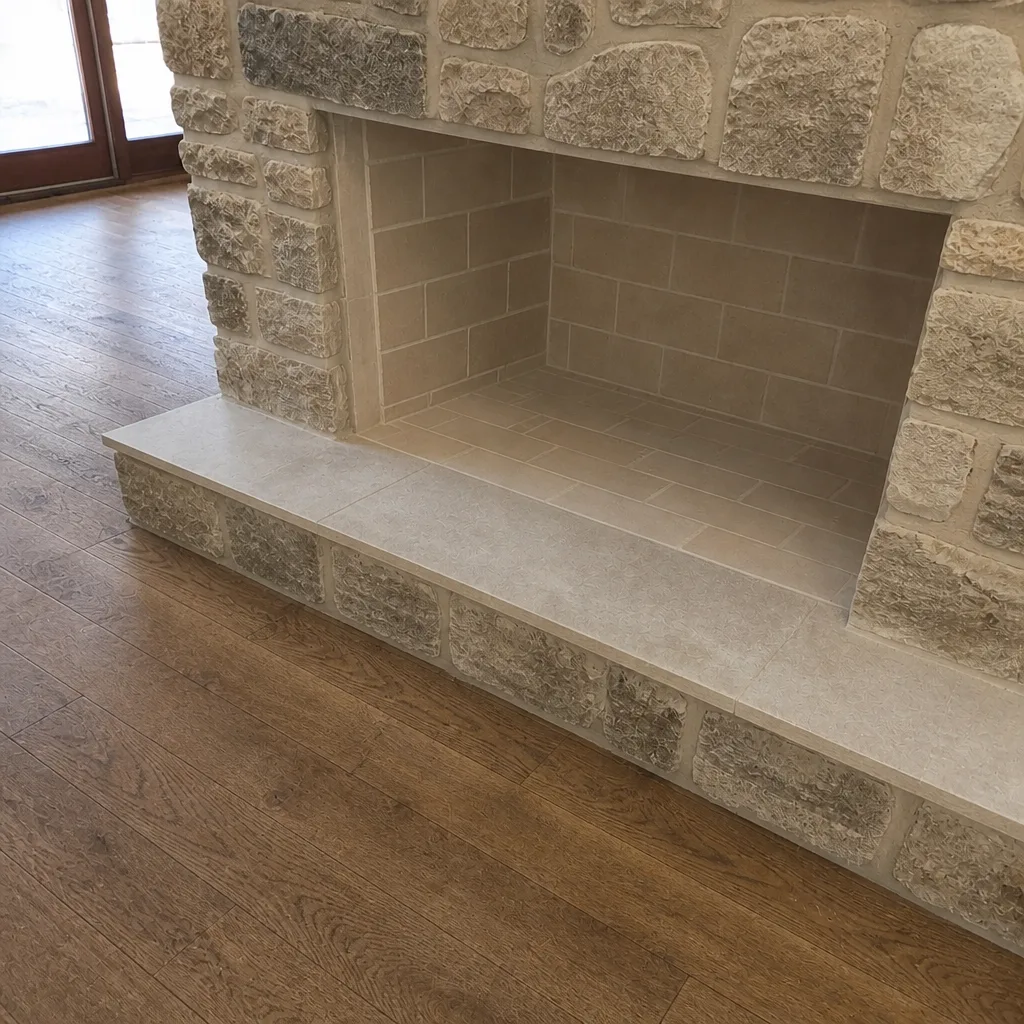
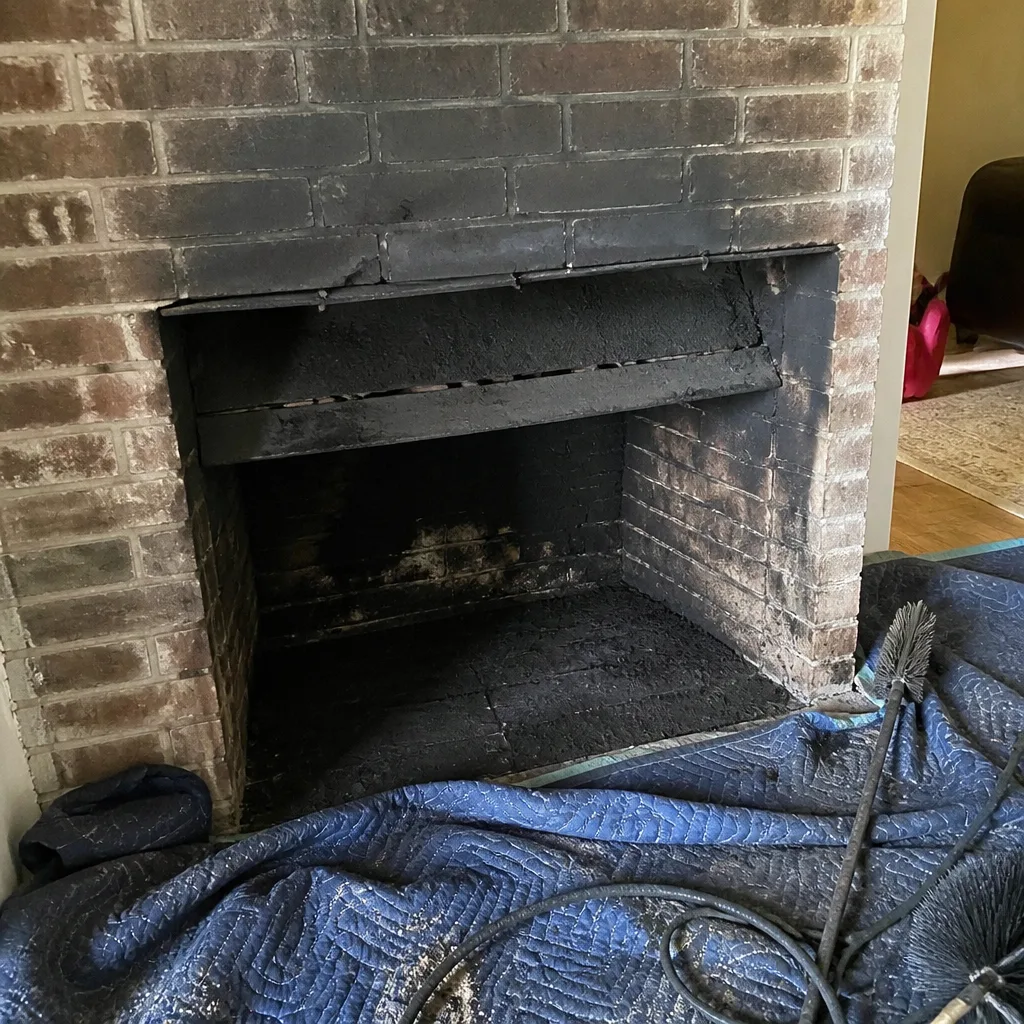
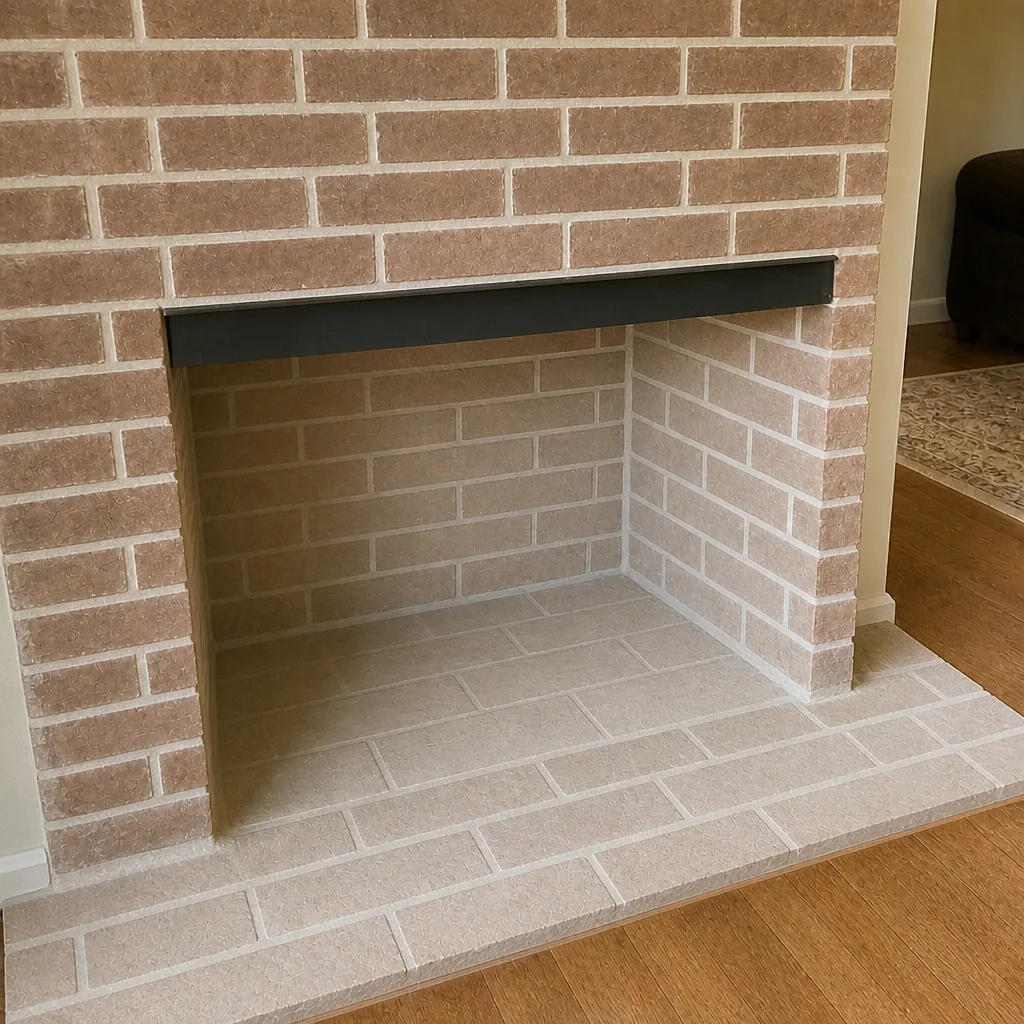
See the difference
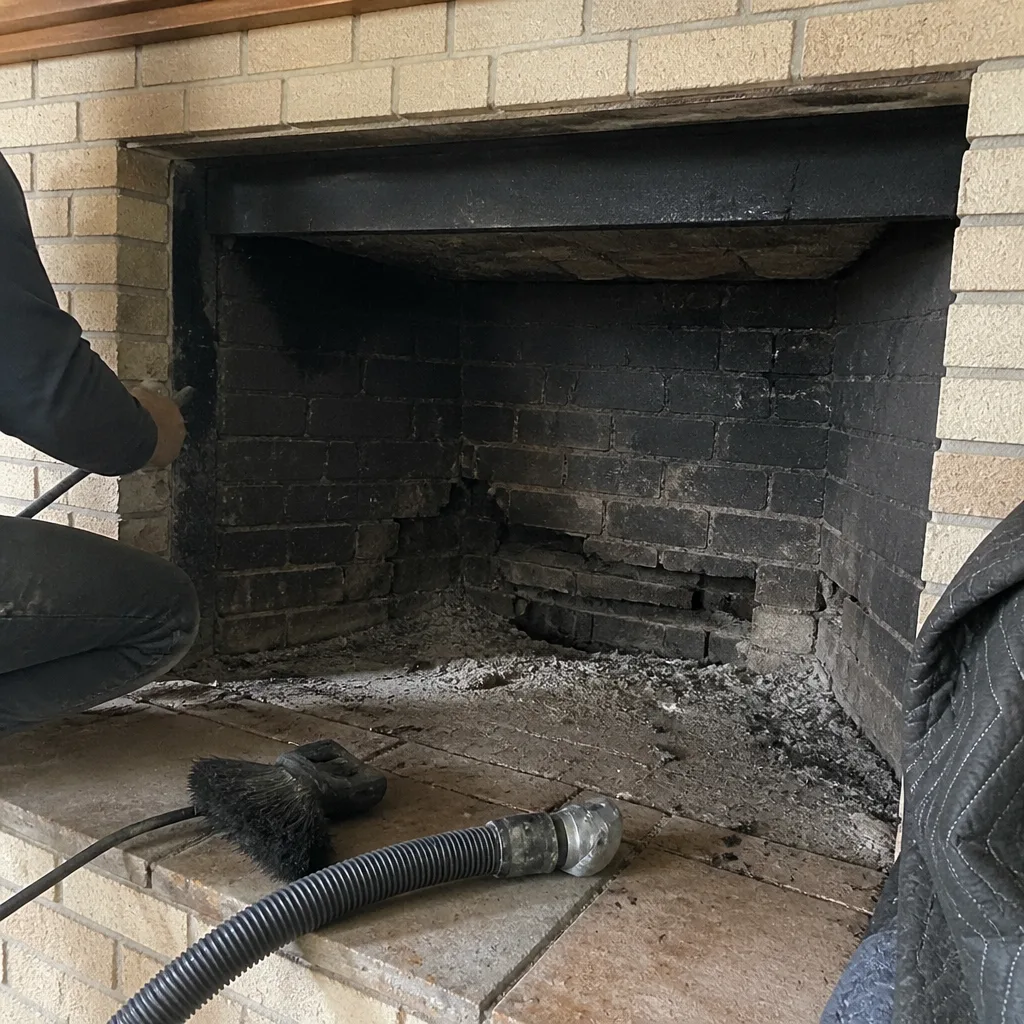 Before
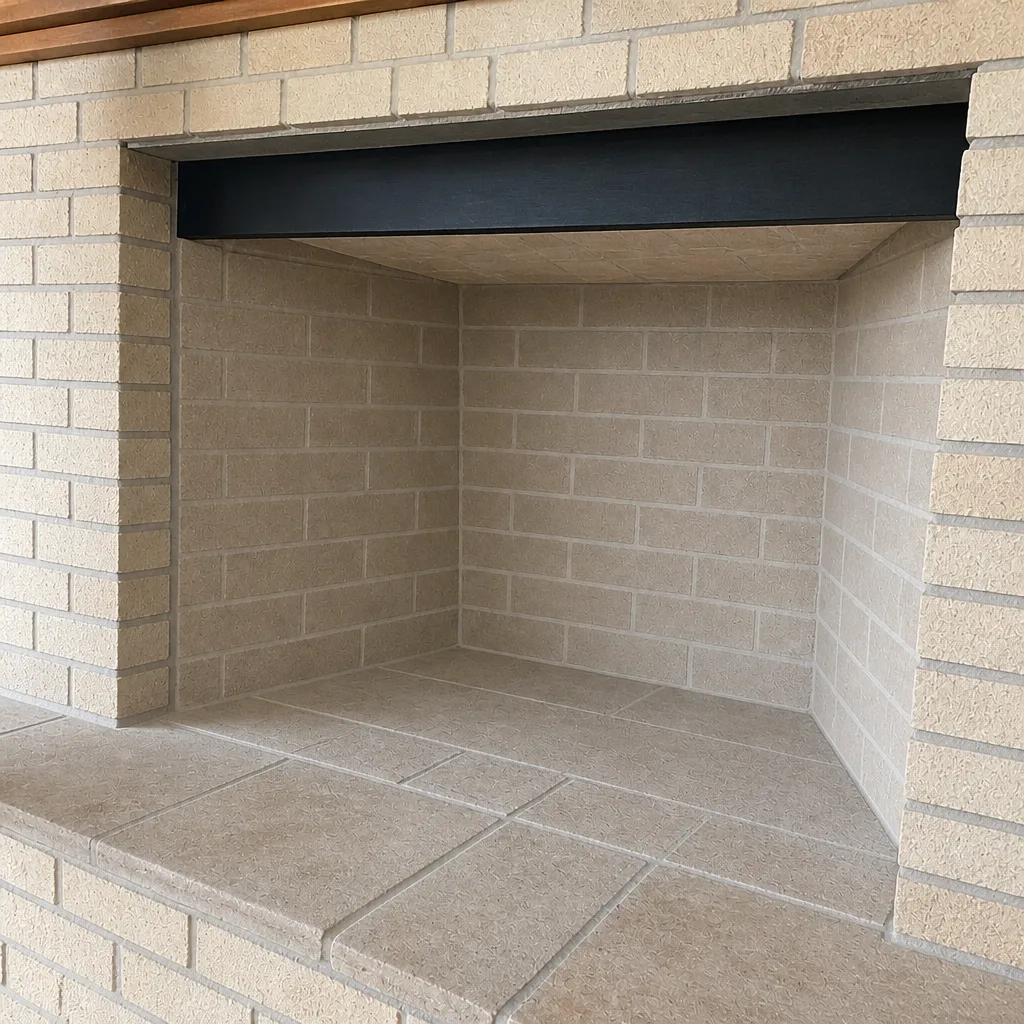 After
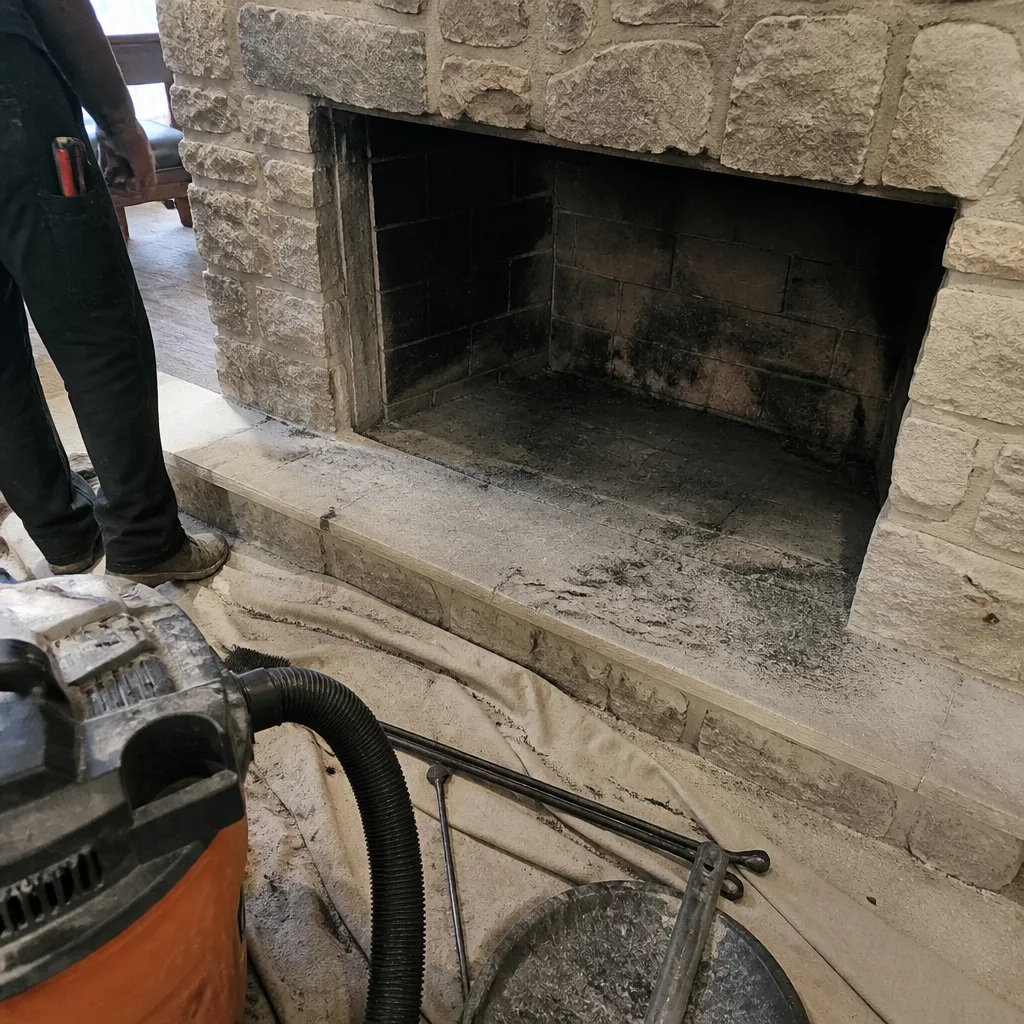 Before
 After
 Before
 After
When to Call a Professional
Some chimney conditions are safe to watch and some need a technician. Call a professional when you see creosote buildup that looks like glazed, shiny tar; when smoke spills into the room instead of drafting up; when the firebox or flue shows visible cracks; when you’ve never had the chimney inspected and don’t know its history; when you’re about to sell a home in New Braunfels; or when an appliance has changed and the flue hasn’t been re-evaluated. A camera inspection is the standard diagnostic in each case. Beacon Chimney Sweep offers free estimates in New Braunfels – call (888) 401-6898. We answer 24/7, with fast dispatch from 7am to 7pm, Sunday through Friday.
Frequently Asked Questions
No. Routine chimney sweeping is classified as maintenance in New Braunfels, and a permit is not required. Permits come into the picture when the work is a repair or alteration, such as relining the flue, resurfacing the smoke chamber, or replacing the cap. If you’re unsure which category your work falls into, an inspection answers it. Call (888) 401-6898 for an exact quote – estimates are free.
Under the IRC as adopted locally, permitted chimney work generally includes alterations and repairs that change the chimney’s structure or venting configuration: relining a flue, installing a new liner for a stove insert, resurfacing a deteriorated flue, and replacing a chimney cap or crown. Whether a specific job requires a permit depends on the office that controls your address. Ask the City of New Braunfels or Comal County before committing to the work.
Most wood-burning chimneys should be swept annually, and more often if you burn frequently or notice heavy creosote. Annual is the baseline because it keeps buildup from reaching the stage where it becomes a fire hazard. An annual sweep also catches small issues before they become repairs. Call (888) 401-6898 to book a sweep – estimates are free.
Only if the inspection finds the existing liner is cracked, deteriorated, or incorrectly sized for the appliance. A cracked liner is the most common serious defect we find, and it’s the reason a camera inspection matters. A HeatShield resurfacing can sometimes restore a flue without a full liner replacement. Nothing is recommended without a camera photo you can see for yourself, and we’ll tell you plainly when a repair can safely wait.
The buyer’s home inspector usually notes it, and the lender or insurer may ask for documentation that doesn’t exist. The resolution is typically a professional inspection and, depending on findings, retroactive permitting or remediation. It’s less disruptive to resolve before listing. Call (888) 401-6898 for an inspection before the sale – estimates are free.
Creosote accumulates with every fire, and past a certain depth it becomes a fire hazard inside the flue. The other risk is carbon monoxide, which can enter the home if the flue is blocked or the liner is compromised. An annual sweep and inspection catch both before they become emergencies. Call (888) 401-6898 to schedule – we answer 24/7.
The Bottom Line
Sweeping your chimney in New Braunfels doesn’t require a permit. The repairs an inspection finds often might, and that’s the line most homeowners miss. Know which permitting office controls your address, call before the work starts, and keep the inspection record. A licensed, insured chimney professional will tell you which category the job falls into and won’t start permitted work without the paperwork. The chimney is the part of the house you can’t see, which is why the record matters as much as the repair. Call Beacon Chimney Sweep at (888) 401-6898 for a free estimate on a New Braunfels sweep, inspection, or repair. Nothing gets recommended that a camera photo doesn’t show.
Written by the team at Beacon Chimney Sweep.