
Last updated November 15, 2026
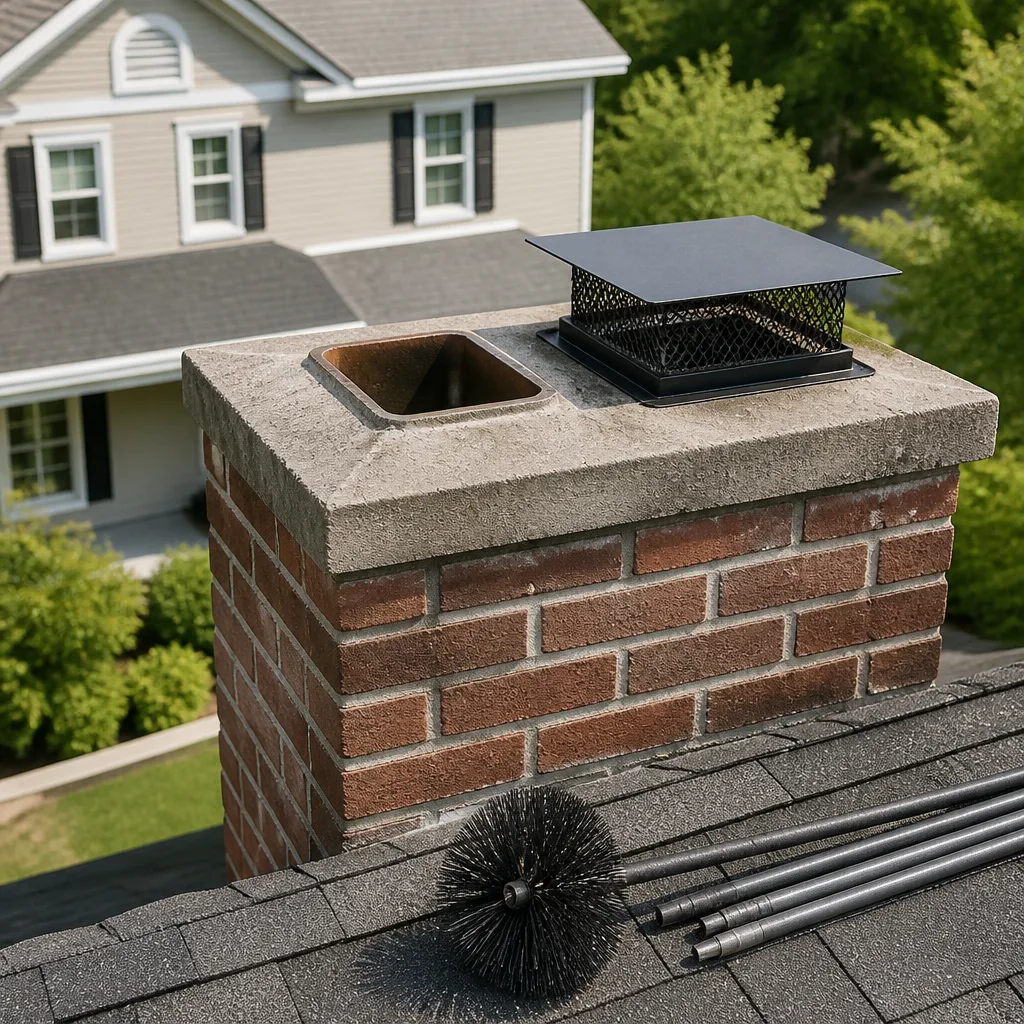 Sweep & inspection
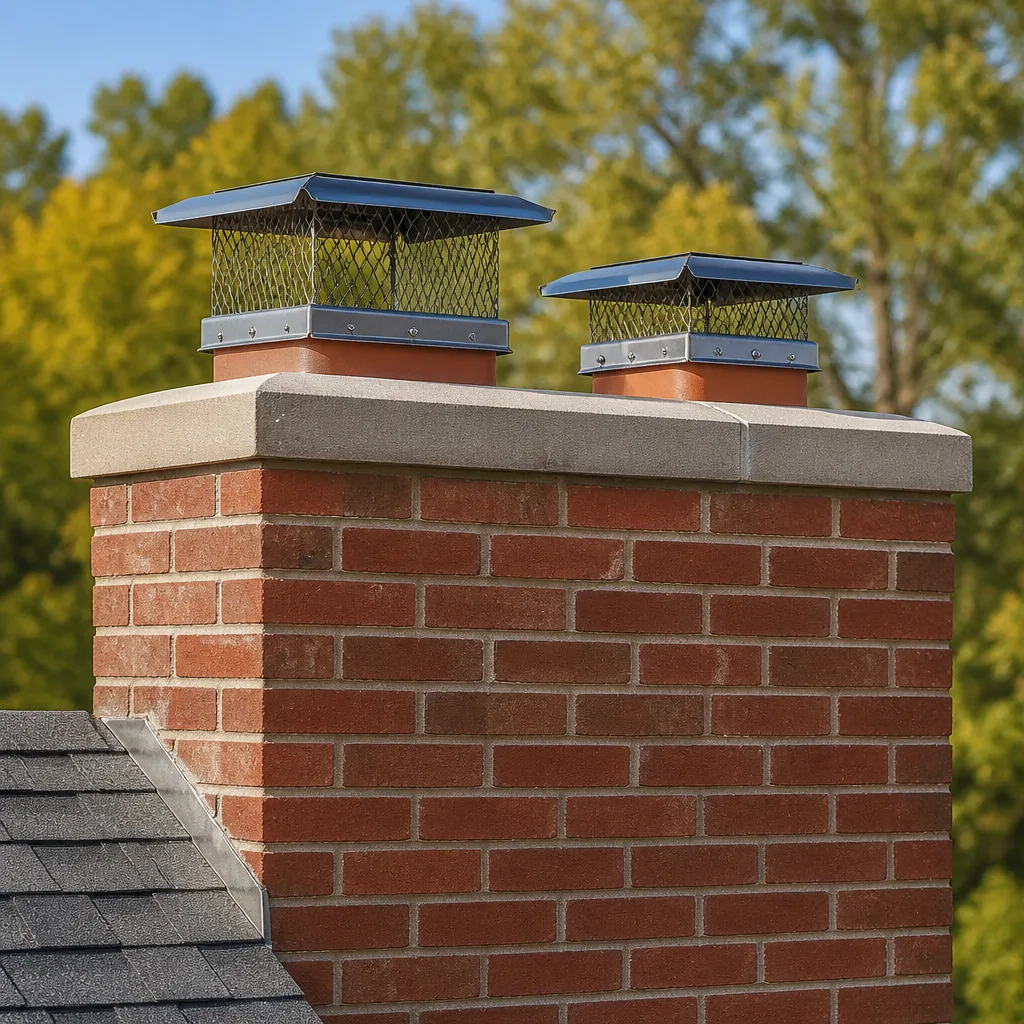 Caps & crowns
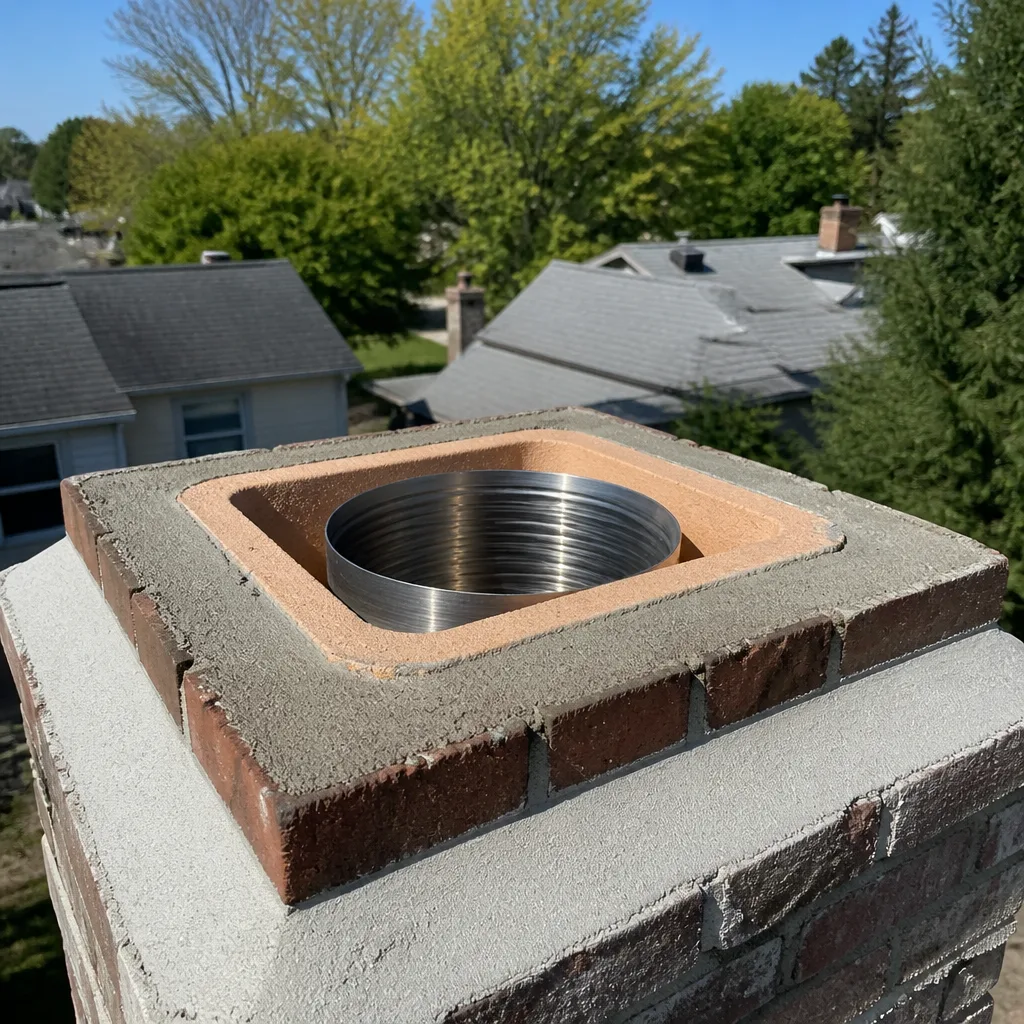 Flue relining
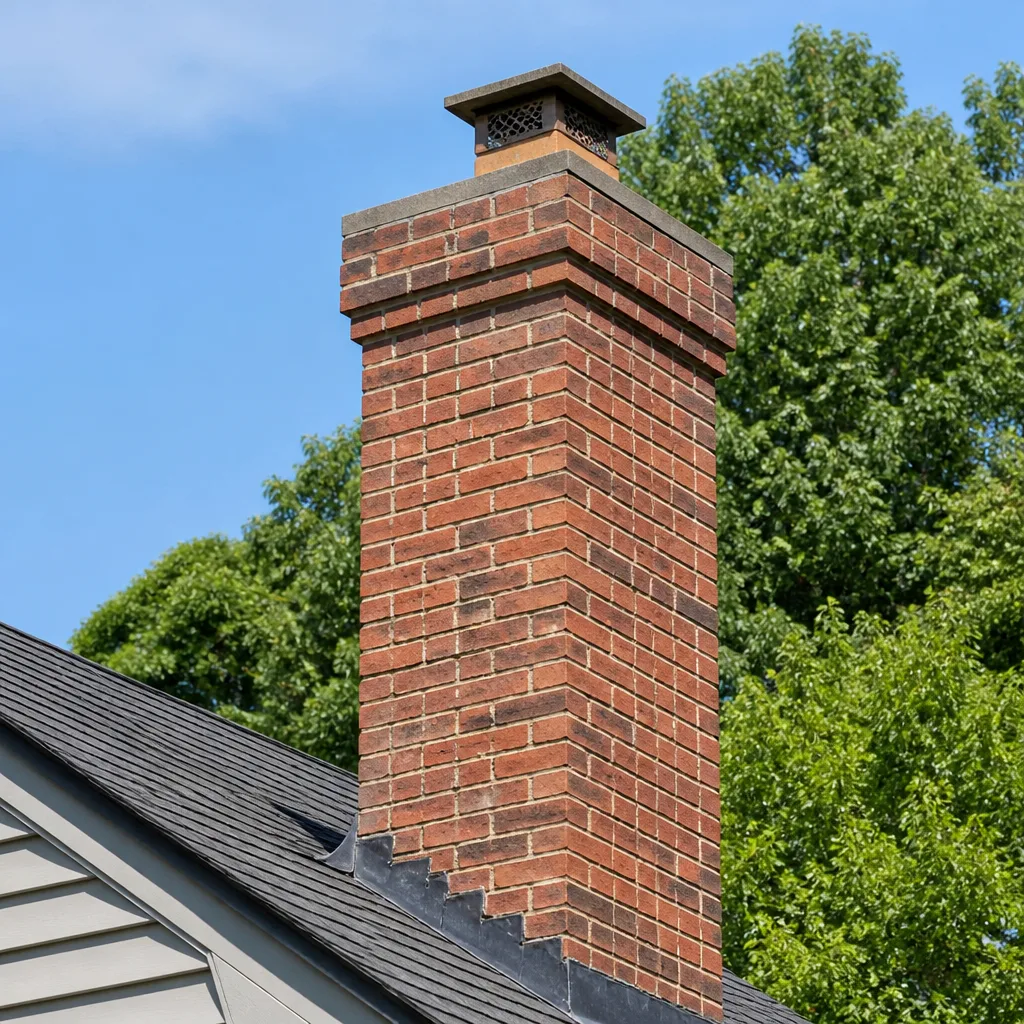 Masonry repair
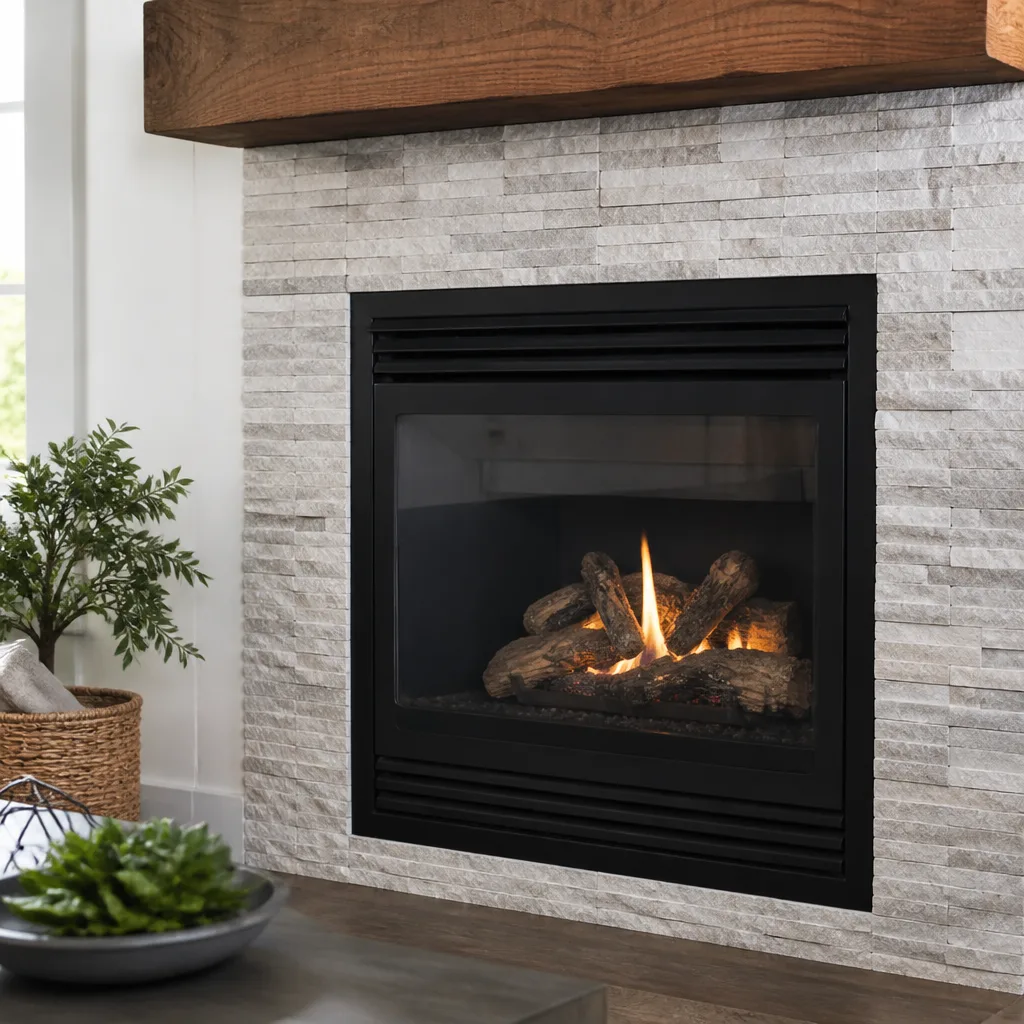 Gas fireplace service
Level 1 sweep and inspection to the NFPA 211 annual standard - flue, crown, cap, and flashing checked and photographed
Chimney sweep logs do not sweep chimneys. They loosen some creosote - which then falls where a brush and vacuum still have to collect it.
Chimney Cleaning Emergency Preparedness Guide for New Braunfels Homes
A chimney fire doesn’t always sound like an inferno. Many burn slow and quiet inside the flue, and the first sign is a low cracking noise, a rumbling hum, or a smell that doesn’t belong in a living room. Homeowners picture flames shooting off the roof because that’s what makes the news, but the fires that do the most damage often run hot and hidden behind a wall of soot. What you know before something goes wrong decides how quickly you act, and that is what this guide gives you: a plain decision tree for New Braunfels homeowners, covering what to stop, what to report, and what to call right away.
Quick Answer
A chimney problem is an emergency when you see or smell smoke in the house, hear a loud roaring or cracking from the flue, notice flames or sparks at the top of the chimney, or have a carbon monoxide alarm sounding – in those cases stop using the fireplace and call 911. It’s urgent-but-not-emergency when you notice creosote buildup, a cracked flue tile, or draft problems with no active fire; that means stop burning and book an inspection. Everything else is a scheduled sweep. A Beacon Chimney Sweep inspection tells you which of those three categories you’re in, and a clean chimney is a safe chimney – here’s exactly what we check and why.
Styles & brands we work with
- Sweep & inspection
- Caps & crowns
- Flue relining
- Masonry repair
- Gas fireplace service
Table of Contents
- How do you know a chimney fire is happening right now?
- What should you do in the first five minutes of a chimney fire?
- Why does a chimney that “looked fine” need a Level 2 inspection?
- Why carbon monoxide deserves its own decision tree
- What to document before an emergency happens
- The three-part decision tree, spelled out
- How New Braunfels seasons change your risk calendar
- Building a chimney emergency kit that actually helps
How do you know a chimney fire is happening right now?
A chimney fire is happening if you hear a hard cracking or roaring inside the flue, smell a hot metallic or acrid odor, see dense smoke backing into the room, or watch flames, sparks, or thick black smoke pour from the top of the chimney. Those are the loud signs. The quiet ones are the ones that fool people: a low popping sound, a persistent smell like burning tar, or a fire that suddenly seems to draw strangely. Any one of them justifies stopping what you’re doing and treating it as real.
The reason identification matters so much is that chimney fires come in two personalities. A fast-burning fire consumes a heavy creosote layer in seconds and is usually obvious. A slow-burning fire smolders inside a smaller deposit, cools as it runs, and does its damage over a longer period – cracking tile joints, warping a metal flue, or loosening mortar where sections join. In central Texas, where burning season arrives in late fall and stretches through a mild winter, a New Braunfels homeowner might burn three or four loads a week for months without thinking about what’s accumulating. That steady, low-intensity use is exactly the pattern that builds the creosote a slow fire feeds on.
Watch for these signals:
- Sound: cracking, popping, a low rumble, or a roar you can hear across the room.
- Smell: a hot metallic odor, tar, or smoke that appears inside the house with the damper open.
- Sight: sparks, dense smoke, or visible flame at the chimney cap.
- Feel: a wall, mantel, or fireplace surround that gets noticeably hot to the touch.
- Draft: smoke that refuses to rise and pushes back into the room instead.
Some of these signs also appear when a chimney has simply become blocked. A nest, a fallen tile shard, or a collapsed section will stall draft and push smoke inward without any fire at all. That’s still a stop-burning situation, and it still needs a trained eye before you light another fire. Call (888) 401-6898 to get an inspection on the schedule – estimates are free, and we’ll tell you exactly what we found.
What should you do in the first five minutes of a chimney fire?
In the first five minutes of a chimney fire, get everyone out of the house and call 911 from outside. Then, and only then, if the firebox is accessible and the home is safe to briefly re-enter, close the glass doors or firebox door and shut the damper to starve the fire of air. That sequence – people first, call second, starve the fire third – is the one that limits damage without gambling with anyone’s safety.
The single thing people do that makes a chimney fire worse is opening the firebox door wide or throwing a bucket of water into the flue. Opening the door feeds the fire a rush of oxygen and can send flames and smoke into the room. Water on a hot flue can crack tile, warp metal, and flash into steam inside a confined space. Neither move is a rescue. Both turn a containable event into a much bigger one.
Here is the order to follow:
- Get every person out of the house. Pets too, if it’s quick.
- Call 911 from outside. Tell them you believe the chimney is on fire and give the address plainly.
- If you can safely reach the firebox, close the glass doors or the firebox door.
- Close the damper if you can do it without smoke filling the room.
- Stay out. Don’t go back for belongings. Don’t climb onto the roof to look down the flue.
- Wait for the fire department and follow their direction completely.
Most textbook guidance tells homeowners to close the damper, and that advice is right – but only after the fire is out of oxygen. Smoke from a hot, smoldering fire has to go somewhere, and in a house with a compromised flue, it can push into living spaces or upper floors. Get out first. Let the professionals make the second decision.
The fire department will tell you when the fire is out. What they won’t do is clear your chimney for future use. That’s a separate step, and it’s the next section of this guide.
Why does a chimney that “looked fine” need a Level 2 inspection?
Any chimney that has survived a fire needs a Level 2 inspection before it’s used again, even if nothing visible is wrong. A Level 2 inspection includes a video camera scan of the entire flue interior, which is the only way to see cracked tile joints, separated liner sections, warped metal, or failed mortar hidden behind a masonry wall. The fire may be out with no obvious damage above the roofline; the interior is where the truth lives.
This is where most homeowners want to save a step. “It worked fine before the fire, it looks fine now, why pay for an inspection?” The answer is what sits between the firebox and the exterior: heat cracking. Tile flues crack vertically along their length during a hot fire, and those cracks are invisible from either end. A steel liner can buckle or separate at a joint. A masonry flue can have mortar crumbling in a section you’d never see without a camera. Each of those defects lets heat, smoke, or carbon monoxide pass into framing or living space – none of them make noise or announce themselves.
A Level 2 inspection closes that gap. At Beacon Chimney Sweep, we run a camera the full length of the flue, take photographs of what we find, and show you the images. We’ll tell you what we found, what it means, and what it’ll take to fix it – no upsell theater. If the flue survived intact, we say so plainly and put you back into normal burning. If it didn’t, the fix starts with the same crew that found the problem, using professional-grade materials. DuraFlex flexible liner systems are the right answer for a flue that needs a reline, and HeatShield resurfacing can restore a flue that hasn’t failed completely and doesn’t warrant a full liner replacement. We carry DuraFlex, HeatShield, and Copperfield so the repair outlasts the invoice.
Why carbon monoxide deserves its own decision tree
Carbon monoxide from a chimney is possible whenever the flue is blocked, cracked, or drafting wrong – and it can build up silently while the fireplace appears to be burning normally. CO is colorless and odorless, so a detector is your only reliable early warning. If a CO alarm sounds, stop using the fireplace immediately, get everyone into fresh air, and call 911 from outside. Do not “air it out and see.”
A blocked flue is the most common path. A bird nest, a fallen cap, a crumbling mortar shelf, or a collapsed liner section all stop exhaust from flowing up and out. When draft fails, exhaust has nowhere to go but back into the room. In our experience across New Braunfels and the surrounding area, blockages often appear in spring after nesting season, or after a windy stretch knocks a cap loose. A homeowner who only burns in winter may not touch the chimney for months and can greet a cold snap with a blockage they never suspected.
Here is what to do when the alarm goes off:
- Get every person and pet into fresh air immediately.
- Call 911 from a safe location and tell them a CO alarm has activated.
- Do not re-enter to open windows, close the damper, or retrieve anything.
- Don’t use the fireplace again until a technician clears the chimney.
Placement of the detector matters. A CO alarm near the fireplace or in a bedroom hallway leading to it is not optional – it’s the only warning you get. Manufacturers ship detectors with placement instructions and replacement intervals; follow them. And when your alarm does go off, the chimney is a suspect even if you can’t smell or see anything wrong. A Level 2 inspection tells you whether a blockage, a failed liner, or a negative-pressure problem caused it.
If you’re not sure whether yours is safe right now, call (888) 401-6898. We answer 24/7, and if the chimney is down until we see it, we’ll say so.
What to document before an emergency happens
Before an emergency, put together a simple record of your chimney system: the last inspection date, the name of the contractor who did it, the serial numbers and models of the fireplace, insert, or stove, your permit paperwork from the original install, and a current photo of the chimney’s exterior. Insurance claims for fire or smoke damage move dramatically faster when these details are on hand, and the first few hours after a fire are the worst time to go hunting for them.
What belongs in the file:
- Installation paperwork: permits, inspection cards, and the installer’s documentation for the fireplace, insert, or wood stove.
- Model and serial numbers: found on a metal plate inside or behind the firebox. Photograph it.
- Last inspection report and date: who inspected, when, and what they found.
- Photos: a clean side shot of the chimney’s exterior, the cap, and the firebox interior.
- Contractor contacts: the sweep, the plumber, the electrician, and your insurer’s claims line.
- Insurance policy number and the insurer’s 24-hour claims number.
Keep one paper copy in a fireproof safe or in a small binder with your other home records, and one digital copy in cloud storage you can access from your phone. It takes about twenty minutes to assemble. If an adjuster calls while your house smells like smoke and your family is standing in the driveway, that twenty minutes is the difference between a smooth conversation and a much harder one.
While you’re at it, note the date of your last chimney sweep. That single line item is the one insurers and fire investigators will ask about first, and it’s the one most homeowners can’t answer.
The three-part decision tree, spelled out
Here is the decision tree this guide is built around. Use it as a simple filter: for every chimney concern, you end up in exactly one of three buckets, and each bucket has one action. The trick is that the buckets are not ranked by how dramatic the situation feels. They’re ranked by what’s actually happening.
- Stop burning and schedule an inspection. Any evidence of creosote buildup, cracks in the firebox, a failing liner, draft problems, smoke that won’t rise, or a smell that persists after the fire is out. No emergency call needed – but the chimney stays cold until we see it.
- Call a sweep the next business day (or as soon as you can). A loss of draft, a cap or damper that doesn’t move freely, a metal chimney making odd noises when cold, or a post-fire “no visible damage” situation. These don’t belong on a 911 line, but they do need professional eyes before the next fire is lit.
- Call 911 tonight. Active fire signs, visible smoke in the living space, a CO alarm sounding, or anyone in the house feeling lightheaded, nauseated, or confused around a burning fireplace.
The one category that trips people up is the middle one. A homeowner who smells a strange odor from the firebox, sees a small crack in the firebox wall, or notices that the fire is drawing oddly will often talk themselves out of calling anyone. That’s the wrong move and the right move at the same time: they’re right that it isn’t a 911 situation, and wrong to think it can wait through a weekend of burning. Stop the fire, and put the chimney on the schedule. If the fire has been out for the season, it can safely wait until the sweep is booked. If you want to burn again before that visit, don’t.
How New Braunfels seasons change your risk calendar
New Braunfels winters are mild, and that has a counterintuitive effect on chimney risk. A mild climate encourages people to burn small, frequent fires rather than long, hot ones, and those small fires tend to burn cooler and smolder more than a hot load would. Cooler burns deposit more creosote per unit of wood. Over a season of short evening fires in a chimney sweep – worthy flue, the accumulation can be surprisingly substantial by the time the first real cold snap arrives.
Humidity matters too. Central Texas runs humid through much of the year, and a masonry chimney on a home in a neighborhood like Gruene or along the Guadalupe can hold moisture in its mortar. Moisture that works into masonry accelerates spalling and weakens joints long before any fire touches them. That’s not a reason to panic; it’s a reason to check the cap, the crown, and the flashing every year so that the chimney isn’t quietly taking on water between burning seasons. A loose cap also lets birds nest and can block the flue without anyone noticing.
Around New Braunfels, the calendar that works looks roughly like this:
- Late summer and early fall: book the sweep. Demand rises sharply when the first cool front hits, and slots fill fast. Getting the inspection done in September or early October is far easier than in November.
- Burning season: burn dry, seasoned wood, keep the firebox cleaned, and watch for the signs in the first section of this guide.
- Spring: check the cap after nesting season, and clear any debris that’s landed on or near the chimney.
- Before lighting the first fire of the year: verify you have an inspection report from within the year, and that the CO detector near the fireplace has fresh batteries.
The annual sweep is the calendar’s anchor. It’s the point at which everything gets verified and the one event that turns the rest of the year into confident burning instead of guesswork.
Building a chimney emergency kit that actually helps
A chimney emergency kit should answer three questions: where are the people, who do we call, and what’s in the file. That’s a different kit from the one most households actually build, which usually amounts to a fire extinguisher sitting in a closet behind the coats. Extinguishers matter, but they won’t stop a flue fire, and a homeowner standing in a smoky room looking for one has already lost the first minute to hunt.
Put together a small plastic bin or a wall-mounted pouch, and stock it with:
- A copy of the document file from the previous section – paper, so it works when the power doesn’t.
- The phone number of your sweep. Beacon Chimney Sweep at (888) 401-6898, or whoever does your annual sweep. Write it down. Don’t rely on your phone.
- A small extinguisher rated for ordinary combustibles, kept outside the firebox, not in the fireplace. Know where it is before you need it.
- A flashlight with fresh batteries, kept somewhere you can find in the dark.
- A CO detector near the fireplace with a manufacturer-specified replacement date written on the back in marker.
- A “do not burn” card you can slide into the firebox after a fire – an old habit that tells every member of the household that the chimney is out of service until further notice.
None of this is exotic. The value comes from having it in one place and telling the rest of the household where that place is. An emergency kit is only as useful as the second person in the house knows it exists.
Common Mistakes to Avoid
- Assuming a quiet chimney means a safe chimney. Slow chimney fires have no visible flame and no roar. If you’ve had a hot, fast, or unusually long fire followed by any odd smell or sound, treat it as a fire until a professional clears it.
- Going back inside during a CO alarm. Never re-enter a house with an active CO alarm to open windows or grab belongings. The gas is colorless and disables people quickly. Call 911 from outside and stay out.
- Burning again after a fire without a Level 2 inspection. “It looks fine” isn’t a clearance. Cracks from a fire can run invisibly along the flue. A burned chimney sits cold until a camera has been through it.
- Skipping the sweep because the fire “burned clean.” An efficient, fast fire doesn’t skip creosote – it deposits it differently. In central Texas, a season of many small fires can build deposits that a couple of long, hot fires would have burned off.
- Storing the fire extinguisher inside a closet or behind the coats. In an actual chimney emergency, seconds matter and no one wants to hunt. Keep the extinguisher visible and easy to grab.
- Rolling a CO detector over to “next year.” Detectors age out and lose effectiveness. Follow the manufacturer’s replacement interval, write the date on the back, and replace it when the date arrives. A silent alarm that no longer works is worse than no alarm because it’s easy to assume it’s still functional.
- Climbing on the roof yourself to “check” the flue. Roofs around New Braunfels are slick with morning dew for far more of the year than most people realize, and a fall from a two-story roofline is a serious injury. A Level 2 inspection done from the ground with a camera does the job far better and without the fall.
See the difference
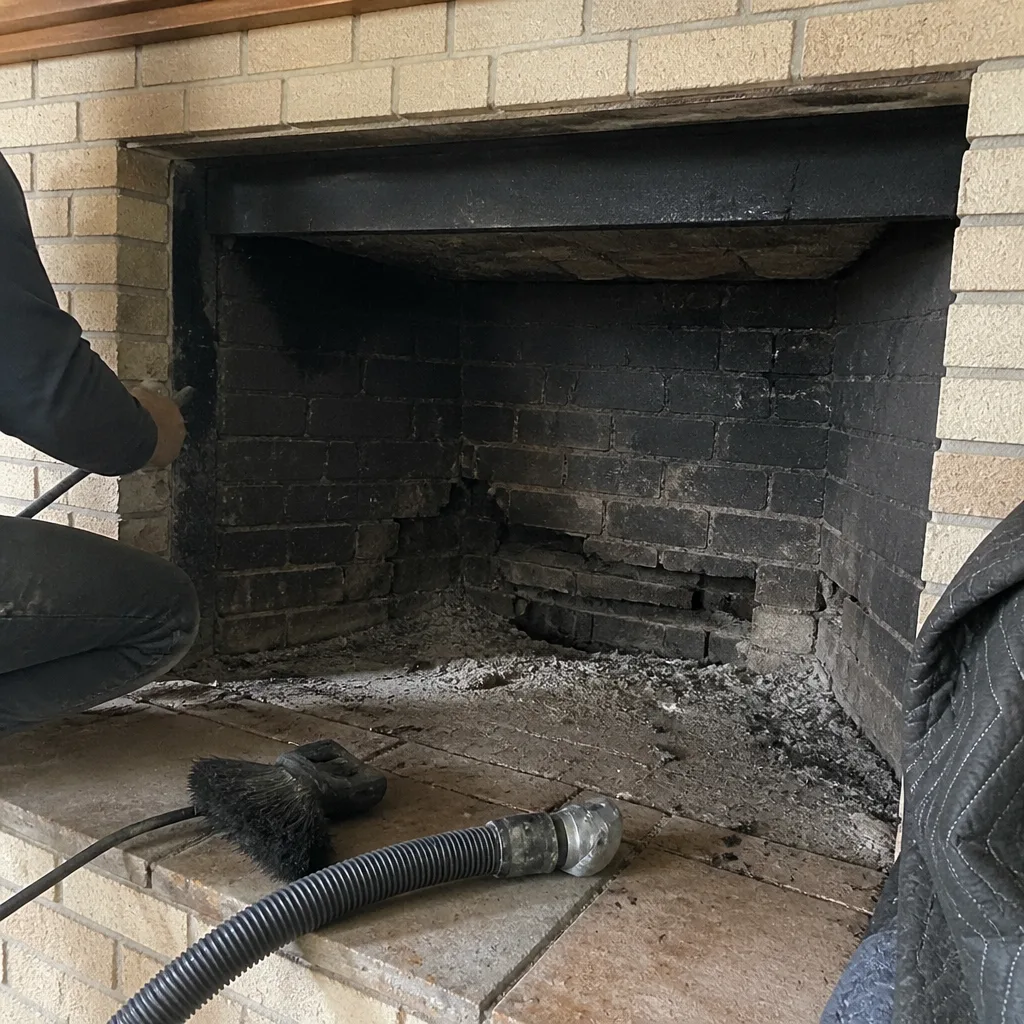 Before
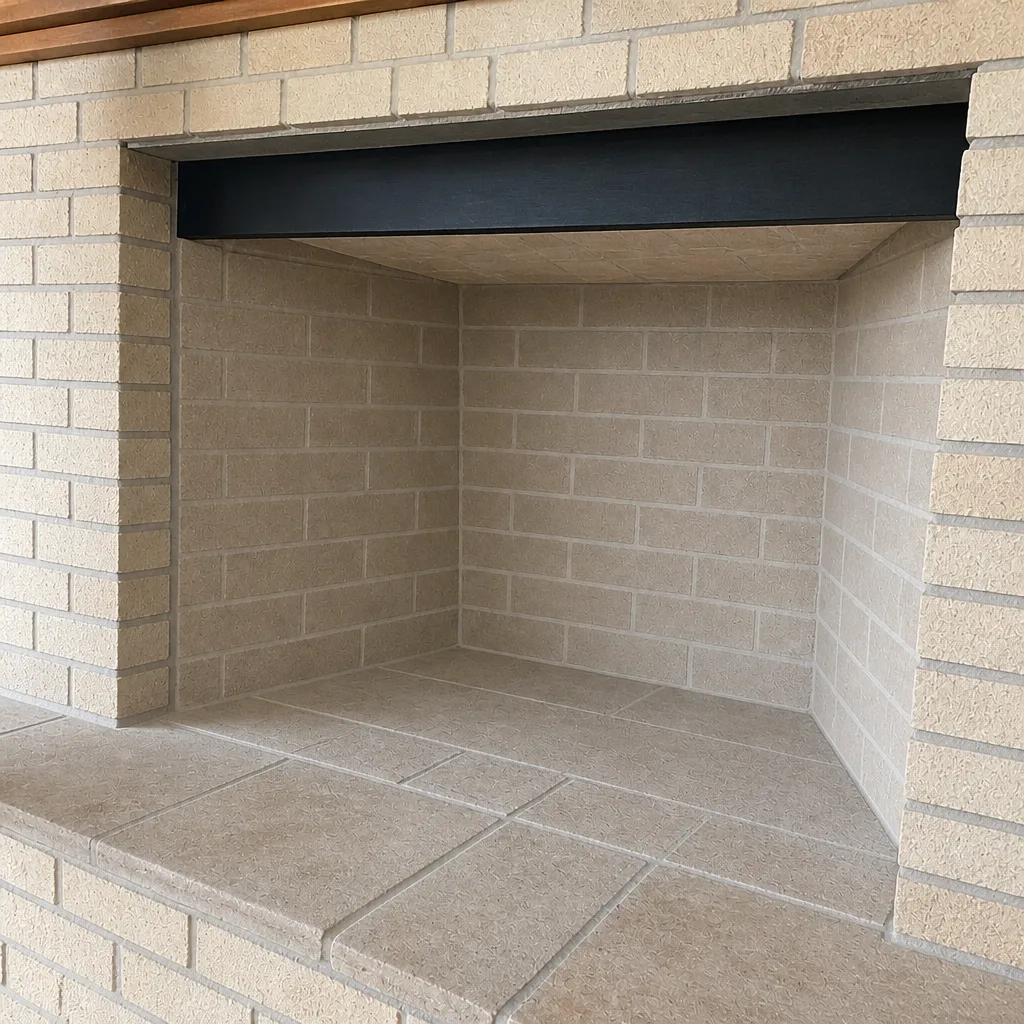 After
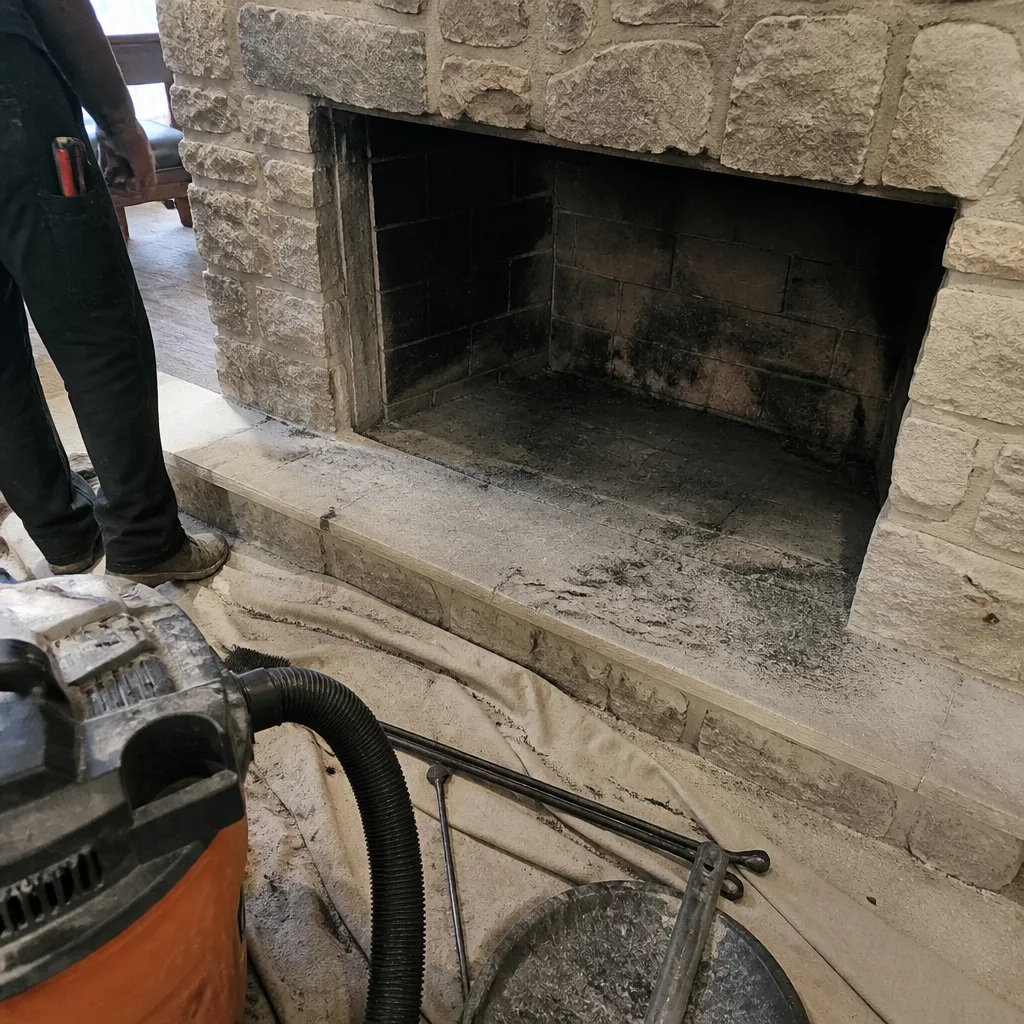 Before
 After
 Before
 After
When to Call a Professional
Call a professional for any of these: an active chimney fire in progress (call 911 first, then call us for the inspection that follows), a CO alarm that has activated, smoke entering the room with the damper open, a burned chimney that hasn’t been cleared for future use, a smell of tar or hot metal that doesn’t fade after the fire is out, cracks visible inside the firebox, a cap knocked loose or missing, and any plan to use a chimney that hasn’t been inspected in the past year. You should also call if you’re simply not sure whether the situation is an emergency – that’s what the phone line is for. Beacon Chimney Sweep offers free estimates in New Braunfels – call (888) 401-6898. We answer 24/7. Fast dispatch from 7am to 7pm, Sunday through Friday.
Frequently Asked Questions
Chimney inspections in the New Braunfels area are quoted per job, and the written estimate sets the final price – there are no hidden add-ons. A Level 1 inspection for a straightforward annual check costs less than a Level 2 inspection with a video camera scan, and a post-fire inspection falls into the Level 2 category. The estimate is free. Call (888) 401-6898 for an exact quote.
Yes. A Level 2 inspection uses a video camera down the full length of the flue, and it is the only reliable way to find cracks, separated liner sections, or failing mortar caused by the heat of a fire. Damage that’s invisible from the firebox and from the roof is common. There’s no way to safely use a chimney that has had a fire in it without that scan. Call (888) 401-6898 to schedule one – estimates are free.
Most chimneys should be swept once a year, and always before the start of the burning season. If you burn frequently through the winter, a mid-season check is worth considering. A chimney that has had a fire, a blockage, or a sudden change in draft needs a sweep and inspection regardless of the calendar. Call (888) 401-6898 to get on the schedule before demand spikes.
Creosote builds up, and once it reaches a critical thickness it feeds chimney fires. Blockages from nests or debris can also cut off draft and push carbon monoxide into the house. Neither failure gives much warning on its own. Skipping the sweep doesn’t produce a problem overnight – it produces a slow accumulation of risk that a fire or a CO alarm eventually reveals. Call (888) 401-6898 for a free estimate on a sweep and inspection.
Yes. Slow-burning chimney fires run cooler and hidden, but they still crack flue tiles, warp metal liners, and weaken mortar joints along the length of the chimney. The damage is often invisible from inside the house and from the roof. That’s why the post-fire rule is a Level 2 inspection, not a visual look. If you suspect one has occurred, stop burning and call (888) 401-6898 – estimates are free.
Place a CO detector near the fireplace and one in the hallway outside sleeping areas, following the manufacturer’s placement instructions. A detector in the same room as the fireplace is the one that responds first to a draft failure or a blocked flue. Replace it on the manufacturer’s schedule, and don’t skip a bedroom hall unit – CO can build up while people sleep. If an alarm ever sounds, get everyone outside and call 911 before calling a sweep, then call (888) 401-6898 for the post-alarm chimney repair inspection.
The Bottom Line
Chimney emergency preparedness is a decision tree, not a panic kit. Know the three buckets – stop burning and schedule a sweep, call us tomorrow, or call 911 tonight – and you’ll respond correctly when something goes wrong. Get the flue inspected every year, keep a CO detector near the fireplace, document the system before you need the paperwork, and never use a chimney after a fire until it’s been cleared by a camera inspection. Beacon Chimney Sweep handles sweeping, inspection, and repair under one roof, so problems found are problems fixed by the same crew. If you’re in New Braunfels, call (888) 401-6898. We answer 24/7. Fast dispatch from 7am to 7pm, Sunday through Friday. The estimate is free, and we’ll tell you plainly whether your chimney can safely wait.
Learn more about Beacon Chimney Sweep and how we handle sweeping, inspection, and repair for New Braunfels homeowners.
Written by the team at Beacon Chimney Sweep.